Space science
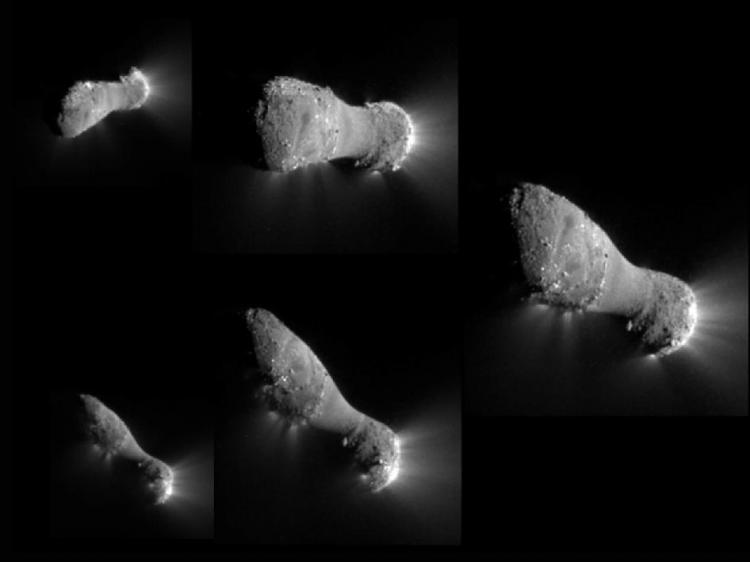
First shot of the close-up of Comet Hartley 2
A space exploration ship of the American Aeronautics Agency (NASA) captured the comet close-up shots Hartley 2 for the first time.
Browse ScienceInfo articles and explainers related to Explorer.
389 published items.
A space exploration ship of the American Aeronautics Agency (NASA) captured the comet close-up shots Hartley 2 for the first time.
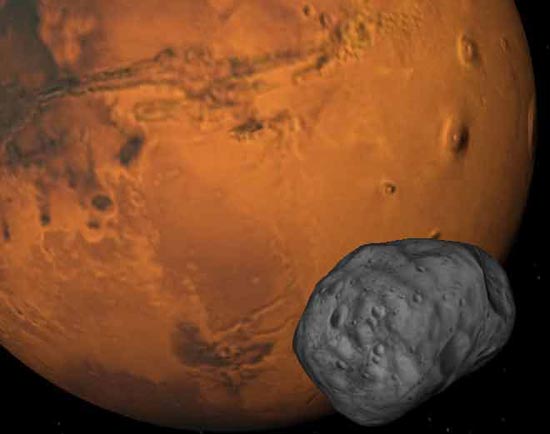
Chinese and Russian spacecraft will take off in October this year to explore the red planet.
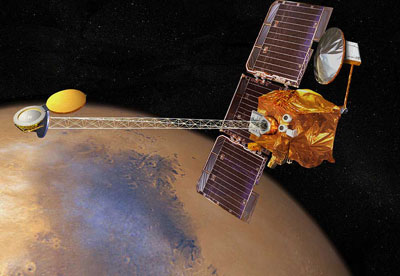
The Odyssey probe of the US Space Agency (NASA) set a new record with the longest-running mission of Mars. Until December 20, the Odyssey flew around the orbit of the re…
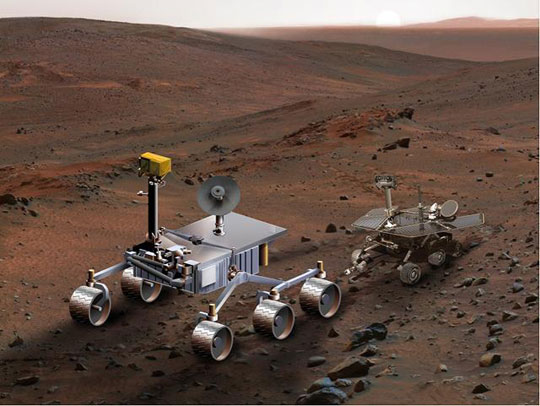
NASA announced it will retrofit Mars explorers a device capable of analyzing rock samples with a laser beam.
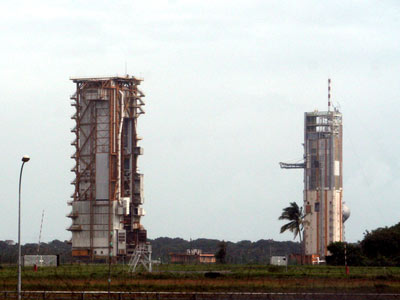
The Chinese Hang-3 and Hang Nga-4 Lunar explorer ship entered the first phase of model research.
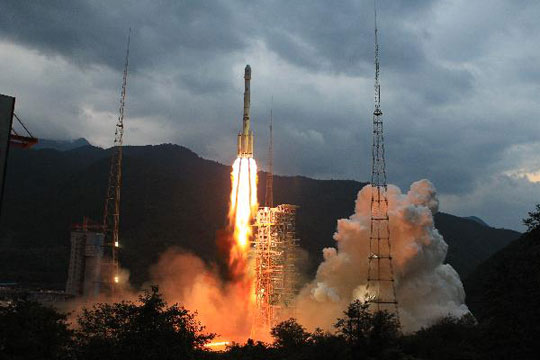
At 18:59 hours 57 seconds, the Chinh Chinh-3 boosters were given fire points to explore the Moon Russian-2 spacecraft.

The explorer Mars Phoenix (Phoenix) was no longer active after being hit by carbon tape to damage solar panels.

US President Barack Obama yesterday launched a series of ambitious goals for the US space industry, including a project to bring people to meteorites and Mars.

Scientists found the location of a Soviet self-propelled Lunar explorer named Lunakhod-2, missing 37 years ago.

The White House adviser in charge of aerospace sector said the US Aeronautics and Space Administration (NASA) decided to cancel the plan to bring American astronauts bac…

Science experiments 'Mars-500' flight simulation on the Red planet will begin at the end of March 2010.

NASA's Wide-field Infrared Survey Explorer (WISE) telescope lets you see stars close to the solar system, which were previously invisible to us.

The American people have just admired the new spacecraft designed to bring astronauts to Mars in the future, and instead of NASA's shuttle generation.

What the Phoenix searched for appeared: on the remaining body of the ship were condensed water droplets, a sign of life that existed.

On October 19, the US Space Agency (NASA) successfully launched an unmanned probe into orbit to study the interstellar boundary area on the solar system.