Space science
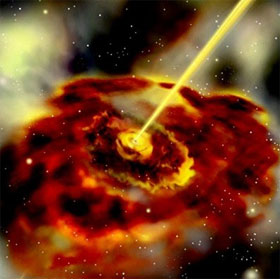
Decode the black hole secret in the Milky Way 2 million years ago
Astronomers have found a solution to the birth of these
Browse ScienceInfo articles and explainers related to Milky.
356 published items.
Astronomers have found a solution to the birth of these
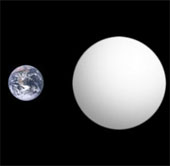
Super Earth are planets orbiting a star outside the solar system, with a larger mass and radius than Earth, but smaller than celestial bodies such as Uranus or Neptune.
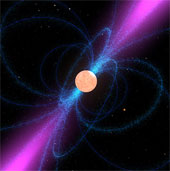
Scientists used a computer cloud, with the combined power of 200,000 personal computers, and found the new Milky Way's 24 metaphors.
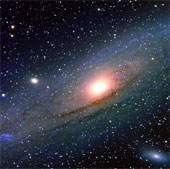
Our Milky Way weighs only about 1/4 to one third of the previously estimated mass, according to the latest analysis of the weight of dark matter in our galaxy.
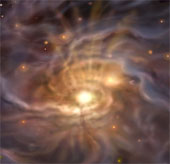
Astronomers are eager to observe the image of the largest known star in the Milky Way, thanks to modern telescopes in Chile.
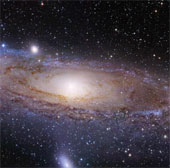
Spiral galaxies like our Milky Way are in fact larger than expected, according to a new study by Colorado Boulder University based on data collected from the Hubble Spac…
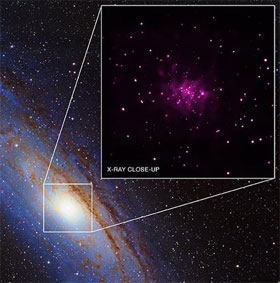
Thanks to the Chandra X-ray observatory of the US Space and Aeronautics Agency (NASA), astronomers have identified 26 new black hole candidates in galaxies Tien Nu, brin…
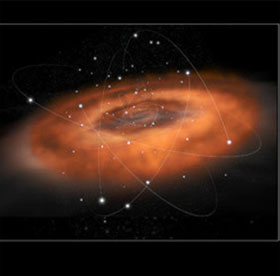
The Herschel Space Telescope has caused a great surprise for astronomers, when observing the extremely hot air being sucked into a black hole in the center of our Milky…
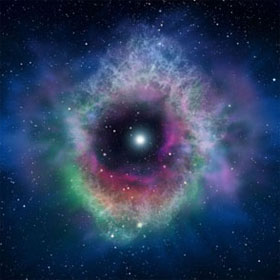
Thanks to a telescope in Chile, astronomers say they have detected traces of pictorial stars at the edge of a black hole in the center of the Milky Way.
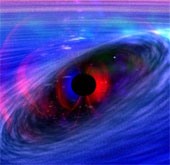
Researchers at the University of California at Santa Cruz (UCSC) in the US have run computer programs on galaxy formation, thus discovering that our Milky Way is probabl…
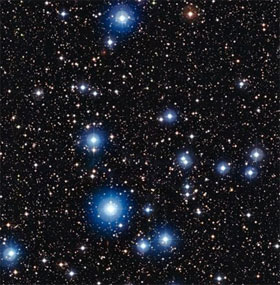
Some of the Milky Way stars must be 13 billion years old, but the production machine is constantly working to produce new generation of stars.
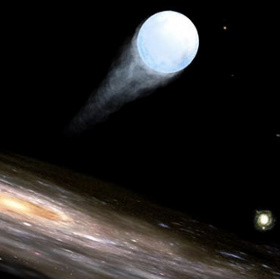
Last month astronomers discovered six super-fast stars flying very fast near the black hole in the center of the Milky Way, where the dust density was so great that the…
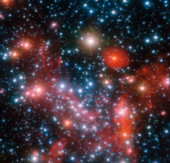
The central region of the Milky Way appears with subtle colors in a photo taken from the ground by a telescope.
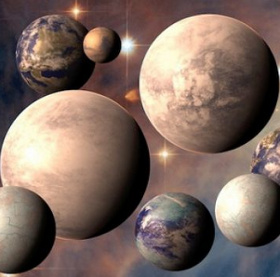
American astronomers predict the Milky Way is home to at least 100 billion stars and 100 billion planets.
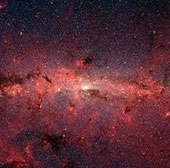
The sky space is vast with countless interesting phenomena and beautiful views, which observers can see with the naked eye or the telescope.