Space science
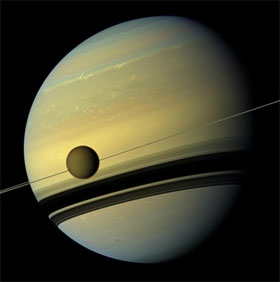
Winter appears on Saturn's Titan moon
Astronomers have discovered a cyanide cloud covering Titan's southernmost region, a phenomenon similar to what happened in 2009 when Saturn, Titan's mother star, began t…
Browse ScienceInfo articles and explainers related to Saturn.
278 published items.
Astronomers have discovered a cyanide cloud covering Titan's southernmost region, a phenomenon similar to what happened in 2009 when Saturn, Titan's mother star, began t…
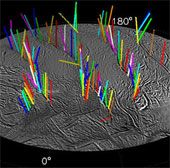
Scientists at the US Aeronautics and Space Agency (NASA) have identified more than 100 geysers on Saturn's moon Enceladus.

The ocean on Titan, Saturn's largest moon, may have salt concentrations equivalent to the Dead Sea on Earth.
The researchers said that the main flavor appears in Titan - the largest satellite Saturn smells
The Cassini cruise ship has flown across Titan, gathering information from the secret lakes on the moon and shooting radio signals over 1.4 billion kilometers to Earth.
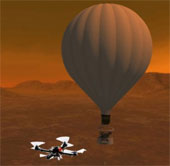
NASA said it is currently considering the possibility of sending a four-man unmanned helicopter (quadcopter) to explore Saturn's Titan moon.
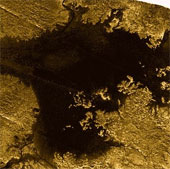
Scientists are looking for the cause of the mysterious appearance of
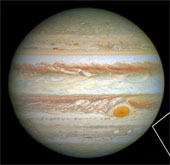
On May 15, the United States announced a Hubble telescope photo of Jupiter, showing a huge storm in Jupiter whose diameter at the end of the 19th century was about 40,00…

Uranus appears as a green dot, about 4.28 billion kilometers from the Cassini and US Space Agency (NASA) and Saturn ships.
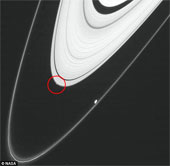
Astronomers believe that the Cassini cruise ship witnessed the birth of a baby moon at the belt of Saturn.
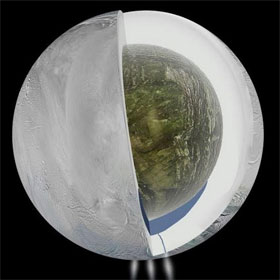
For years, astronomers have been constantly searching for planets capable of nurturing life.
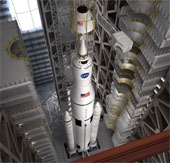
With the volume and superior load capacity compared to Saturn boosters that once put Neil Armstrong on the moon, SLS boosters promise to pave the way for people to go to…
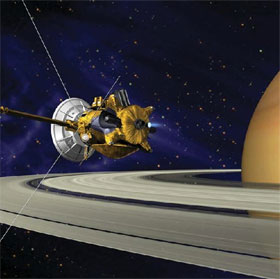
Based on data from the Cassini spacecraft, experts identified the Saturn belt formed about 4.4 billion years ago, shortly after the planet pictured.
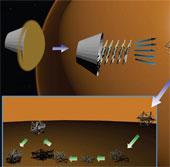
NASA scientists are testing robots capable of being dropped from a height of almost 100km and still landing gently on any surface of the celestial body.
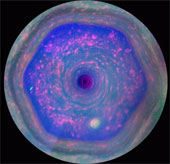
The Cassini spacecraft has sent from Saturn the image of a strange hexagonal object with surface wind stronger than a Category 5 storm on Earth.