Archeology
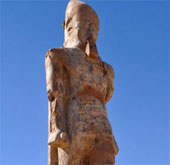
Restore the pharaoh statue after 3,200 years
The statue in the walking posture of pharaoh Amenhotep III, once dumped more than 3,000 years ago in an earthquake, was restored to its original state.
Browse ScienceInfo articles and explainers related to Statue.
376 published items.
The statue in the walking posture of pharaoh Amenhotep III, once dumped more than 3,000 years ago in an earthquake, was restored to its original state.
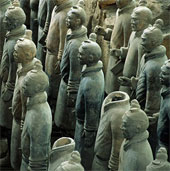
These terracotta statues are proven to follow the prototype of a real army, not a mass product.
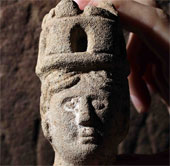
The head of a stone figurine of a Roman goddess was excavated by archaeologists at South Shields, England.
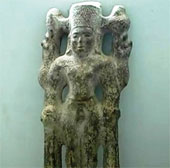
Pho statue of Visnu, which appeared in the ninth century to the 10th century, was discovered by a man behind the garden while digging banana soil.
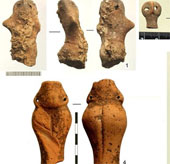
Many small statues like humans and remains of sacrificial animals have been discovered in a 6,000-year-old temple in Ukraine's prehistoric settlement.

This statue is 12.5cm tall with the breast, wings, eyes and crests covered in green and blue enamel. The ponytail is also glazed and removable.
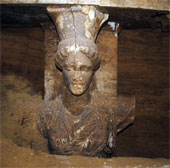
Greek archaeologists excavated a large grave of Alexander the Great on Kasta hill, Serres region in northern Greece.
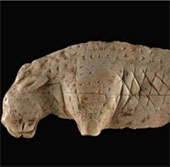
Archaeologists from the University of Tubigen (Germany) found ivory fragments belonging to an animal statue dating to about 40,000 years.
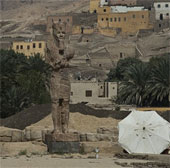
One of the two newly restored statues is 11m tall and weighs 250 tons. Both statues are present at the temple of Pharaoh Amenhotep III and two other famous statues.
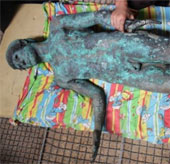
An ancient statue of Greek goddess Apollo was unearthed by scientists in the Gaza Strip.
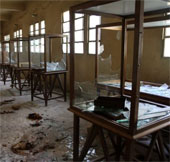
Egyptian authorities are recovering the statue of Pharaoh Tutankhamun, stolen from the museum during the August riots.
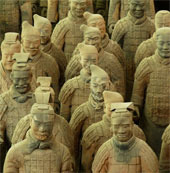
Archaeologists who study sculpture in the tomb of Qin Shi Huang have come up with an unexpected hypothesis concerning Greek art.
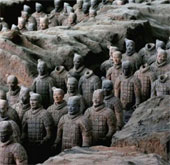
The terracotta army holding the tomb of Qin Shihuang is equipped with weapons capable of defeating the enemy with a single arrow.
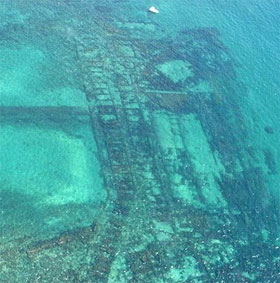
On November 7, Italian archaeologists said they had found a step of ancient marble Roman statues in an underwater imperial palace near the Bay of Naples.
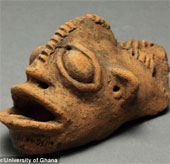
Archaeologists at the University of Ghana and Manchester said the strange clay statues found in Africa could be used by ancient people to heal.