Space science
Comet 'century' approaches the Earth
ISON, the giant comet that has been dubbed the comet of the century by scientists, will
Browse ScienceInfo articles and explainers related to The Earth.
767 published items.
ISON, the giant comet that has been dubbed the comet of the century by scientists, will
The US Aeronautics and Space Agency (NASA) urged people around the world to wave their hands into the air on July 19 when Cassini intended to photograph the Earth throug…
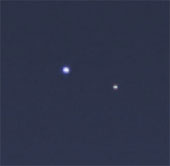
The US Aeronautics and Space Agency (NASA) on July 22 published on its website a picture of Earth from a Cassini probe in the Saturn belt, 1.5 meters from our green plan…
Scientists are constantly looking for answers to the question: Can asteroids deflect the Moon's orbit and make it crash into the Earth, causing our planet to suffer disa…
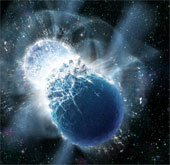
Researchers at Harvard University (USA) on July 17 said a strange light source in the universe has provided new evidence that all the gold on Earth is formed by the deat…
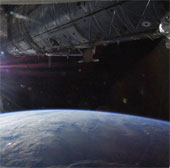
Despite the heat of the men who swept in the past few days, the Earth was determined at the maximum distance from the sun on July 5.
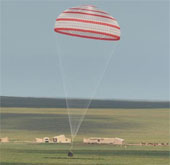
As expected, at 8:07 am on June 26 (local time), China's Shenzhou 10 spacecraft carries three astronauts who have completed their historic flight, returning to Earth suc…
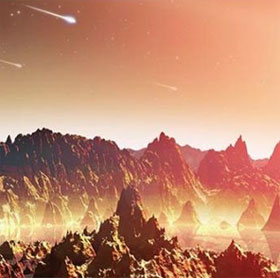
Meteors have brought to Earth the phosphorus substance, an extremely necessary element for the formation of life on the Green Planet.
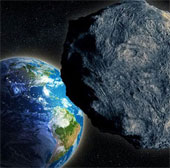
The US Aerospace Agency (NASA) announced scientists discovered the 2013 LR6 meteorite exactly one day before it flew south of the Ocean, off Tasmania, Australia at 4:42…
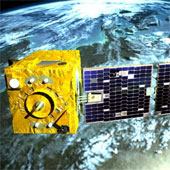
On May 14, the Management Board of the Small Satellite Project (Vietnam Academy of Science and Technology) said that VNREDSat-1 satellite has been operating stably in or…
The 1998 QE2 meteorite will be closest to Earth at a distance of 5.7 million kilometers (15 times the distance between the earth and the moon) on May 31.
This is the result published by American researcher Matthew Huber, Purdue University, USA.
Russian scientists are studying a project to create an orbital belt to protect the Earth from dangerous collisions with asteroids.