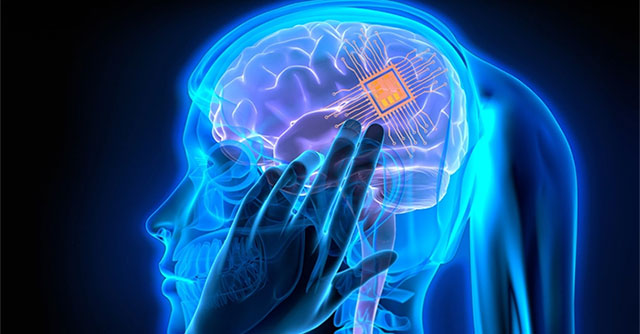
Tech mogul Elon Musk's startup has been granted permission to test implanting chips into human brains. Thousands of applicants have already applied.
Neuralink, which Mr Musk co-founded in 2016, plans to implant electronic devices in 11 people by 2024 and continue testing until 2030. It is expected that by then, more than 22,000 people will have chips implanted in their brains .
In March 2023, the US Food and Drug Administration (FDA) refused to grant Neuralink approval for an electronic implant over concerns that the wires connected to the chip could overheat or move around inside the head. But recently, the agency granted Neuralink approval.
Neuralink will begin recruiting quadriplegics from spinal cord injuries in September 2023. The company hopes to develop a device that creates a kind of human-machine symbiosis, with the initial application being to help people with neurological problems control, and eventually allowing people to send messages or play games with just their thoughts, without using their hands.
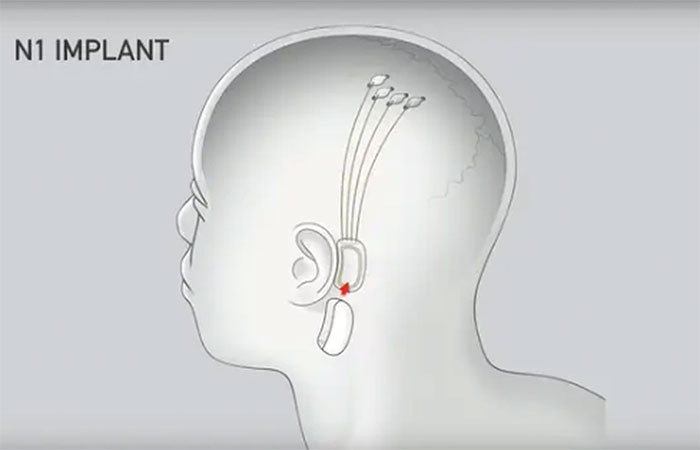
The chip will sit behind the ear and have wires connected to electrodes that contact the brain. (Photo: Neuralink/YouTube).
Volunteers will undergo a two-hour surgery to remove a piece of their skull, followed by a 25-minute robotic procedure to insert the device. The ultra-thin device has about 64 wires, each about 1/14th the diameter of a human hair.
In competition with other AI startups like Synchron and Onward, which have already begun human experiments, Neuralink is ambitious to accelerate its research to catch up with AI (artificial intelligence) because according to the company, in the future, AI will no longer be friendly to humans.
Before testing on humans, Neuralink performed 155 similar surgeries on a variety of experimental animals, including pigs and monkeys. These surgeries were performed not only by humans but also by robots. Neuralink's direction is to gradually reduce human involvement and eventually all surgeries will be performed by robots.