If you want to live to a very old age, perhaps you should think of yourself not just as a human, but as a holobiont – a collection of human cells along with the trillions of microorganisms that live in and on your body.
Because it's not just our cells that change as we age; our microbiome does too. And a growing body of research suggests that friendly bacteria—and not-so-friendly residents—are at the heart of healthy aging. Nurturing them may be a smart way to live healthier and longer.
More than a century ago, zoologist Élie Metchnikoff speculated that senility was caused by ' autolytic bacterial toxins ' and recommended fermented milk and a simple lifestyle as remedies. Today, that primitive theory has evolved. We know that the microbiome is so ingrained in our physiology that it affects everything from digestion to metabolism and even brain function.
However, untangling its impact is challenging. ' The complexity of the microbiome is similar to the complexity of the human brain, ' says microbiologist Filipe Cabreiro at Imperial College London.
No two people have the same microbiome, and even within the same individual, it can change from day to day. But we are gaining important clues. We understand better, for example, which gut residents are beneficial and which are pathogenic. One thing is clear: diversity is key. The more species of microbes in your gut, the healthier you tend to be.
Unfortunately, as we age, our microbiomes change, with a tendency for beneficial bacteria to decline later in life. Older people often eat less diverse foods, take more medications, and have fewer social interactions – all of which affect the types of microbes that live in their guts. But even animals kept in identical conditions all their lives show age-related changes in their microbiomes, suggesting an intrinsic shift with age.
To understand the impact of this decline, many researchers have focused on microorganisms that produce short-chain fatty acids (SCFAs) through the fermentation of dietary fiber. SCFAs are involved in many beneficial processes, such as maintaining intestinal mucosal cells, inhibiting inflammation, modulating the immune system's response to pathogens, and controlling blood glucose levels.
Inflammation
As we age, the number of SCFA-producing microbes decreases while those that cause inflammation increase. ' This imbalance is thought to contribute to chronic, low-level inflammation, known as inflammaging, which is linked to a higher risk of diseases like cardiovascular disease, dementia, and stroke ,' says Jessica Schneider, chief scientific officer at Corundum Systems Biology, a company in Tokyo, Japan, that invests in the research.
However, the gut microbiota of people who reach extreme longevity appears to be more resistant to this decline. The key evidence comes from a 2023 study of 1,575 people aged 20 to 117 led by Shifu Pang and Xiaodong Chen of Guangxi Medical University in Nanning, China, and colleagues. The study found that, compared with adults aged 66 to 85, the gut microbiota signatures of people aged 100 to 117 were more similar to those of younger people, with higher diversity and greater density of beneficial bacteria belonging to the phylum Bacteroides. ' Our results strongly suggest that the gut microbiota signatures of centenarians show similarities to those of younger people ,' the researchers concluded, speculating that this factor contributes to longevity.
This raises the question of whether we can nurture the microbiome to age better.
Changing your gut microbiome isn't easy. ' You're trying to introduce one complex community into another complex community that tends to be more aggressive, ' says Cabreiro. But while prebiotics, supplements that feed helpful gut bacteria, and probiotics, gut-friendly microorganisms you can take as supplements, may not fundamentally restructure your microbiome, they can nudge it in a positive direction, at least temporarily.
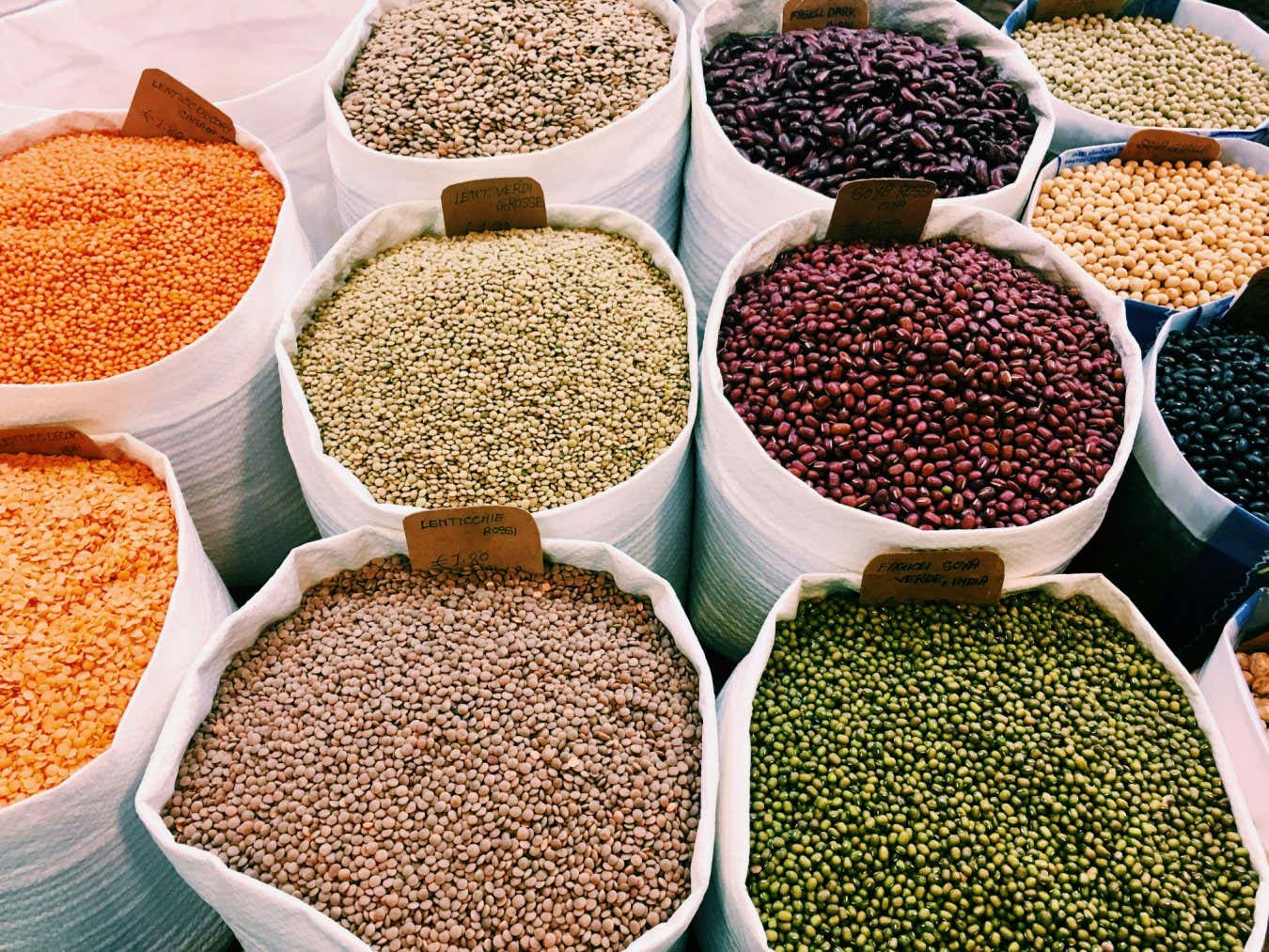
A healthy plant-based diet, including plenty of legumes, helps nourish the gut microbiome (Photo: Betty Subrizi/Unsplash)
For example, last year, nutrition company Zoe showed in a randomized trial that its prebiotic, with 30 plant nutrients, increased beneficial bacteria, with some improvements in health markers like inflammatory compounds in the blood.
Another study, in 50 adults living in nursing homes, showed that taking a daily prebiotic containing the plant compounds fructooligosaccharides and inulin for 13 weeks improved frailty measures compared with a placebo.
Dietary changes can be just as effective. When older people in several countries followed a Mediterranean diet for a year, those who adhered most closely maintained greater microbial diversity and increased gut microbes associated with healthy aging. This correlated with a variety of health improvements, according to Schneider, such as better walking speed, strength, and memory.
More radical treatments are also being explored. Fecal microbiota transplants have been approved for Clostridium difficile infections , and promising data suggest they may also treat other conditions, but whether such treatments extend lifespan remains an open question. In animals, replacing old microbiota with younger, healthier ones has had dramatic results—old killifish lived 37% longer if they ate the feces of younger fish, for example. Experiments in mice have shown similar benefits.
But the field is still in its infancy, says Cabreiro. We have a lot to learn. Microbiome activity influences many biological pathways related to aging, including those in the mitochondria, metabolism, and immune system, and we're only just beginning to explore how we can tweak our microbes through diet, drugs, or even CRISPR gene-editing technologies.
' It's early days, we don't have everything figured out yet ,' says Cabreiro, ' But there's excitement about how all this could benefit our health and longevity – and that's absolutely worth it .'