While men are often more adept at calculations, many women have also demonstrated genuine talent in this field, especially mathematics.
The most famous female mathematicians
- 1. Hypatia (370 - 415), Egyptian
- 2. Sophie Germain (1776 - 1831), French
- 3. Ada Lovelace (1815 - 1852), English
- 4. Sofia Kovalevskaya (1850 - 1891), Russian
- 5. Emmy Noether (1882 - 1935), German
- 6. Emilie du Châtelet (1706-1749)
- 7. Maria Agnesi (1718-1799)
- 8. Mary Cartwright (1900-1998)
- 9. Julia Robinson (1919-1985)
- 10. Shafi Goldwasser (1958)
The prestigious Smithsonian magazine (USA) once selected five famous female mathematicians in history. These women proved that there is no gender distinction in subjects traditionally considered to be for men, such as mathematics.
For more context, see 5 famous female mathematicians in world history.
1. Hypatia (370 - 415), Egyptian
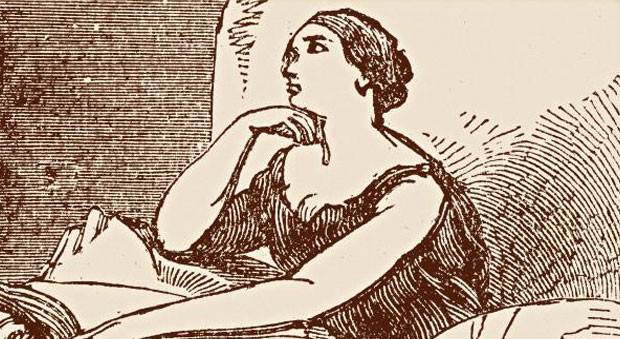
Hypatia is considered the first female mathematician in history. (Image: famous-mathematicians.com).
Hypatia was born in Alexandria, Egypt, and is considered the world's first female mathematician. She was the daughter of Theon, a renowned scholar and the last librarian of the famous Alexandrian library. Hypatia received the highest level of education and studied mathematics and astronomy under her father's dedicated guidance.
She and her father wrote commentaries on classical mathematical works, translating and compiling explanatory notes. At the same time, she also wrote her own commentaries and taught many students at home. Hypatia was also a philosopher and a follower of Neoplatonism.
Despite her talent, Hypatia is known for her tragic death. She was murdered by a mob of fanatical Christians, becoming a scapegoat in a political battle between her friend Orestes, the governor of Alexandria, and the city's archbishop, Cyril.
2. Sophie Germain (1776 - 1831), French
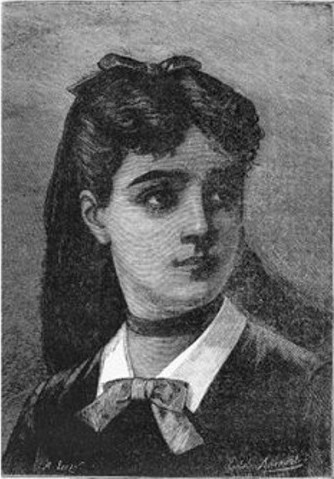
Sophie Germain is a renowned French female mathematician. (Photo: Smithsonian).
Germain was born in Paris into a wealthy family. One day, while browsing through her father's library, she stumbled upon a history of mathematics book that discussed the life of Archimedes.
After learning of Archimedes' death, she began studying mathematics and geometry, even teaching herself Latin and Greek so she could read classical works.
Unable to study at the prestigious École Polytechnique because she was a woman, Germain used a pseudonym to present some of her research and sent it to Joseph Lagrange, a lecturer at the school.
When Lagrange learned that Germain was a woman, he was extremely surprised, became her advisor, and introduced her to other famous mathematicians of the time.
Germain's research faced many obstacles due to a lack of formal training and limited access to data sources that male mathematicians had at the time. However, she still became the first woman to win the French Academy of Sciences prize for her work on elasticity theory and proving Fermat's Last Theorem. Although unsuccessful, it served as a foundation for mathematical work in the 20th century.
3. Ada Lovelace (1815 - 1852), English
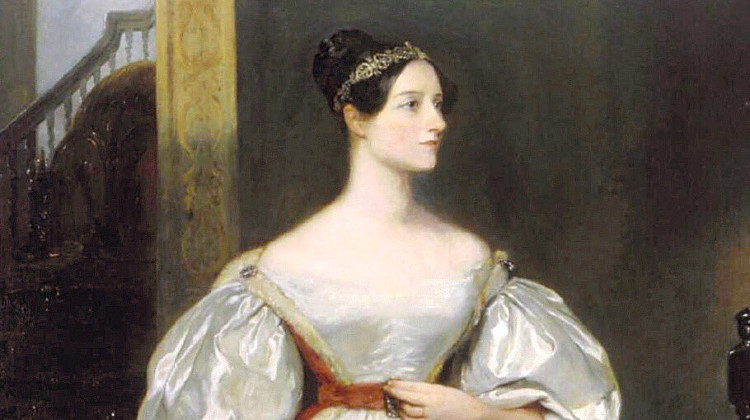
Ada Lovelace is considered the world's first computer programmer. (Photo: Corbis).
Ada Lovelace, whose full name was Augusta Ada Byron (Countess Lovelace), had no knowledge of her father, the poet Lord Byron. A month after her birth, her parents divorced and her father left England.
Lovelace's mother was overly protective, wanting her to grow up less emotionally sensitive than her father. Therefore, Lovelace was encouraged to study mathematics and science.
As an adult, Lovelace had the opportunity to meet the inventor Charles Babbage. He asked her to translate the memoirs of an Italian mathematician analyzing the Analytical Engine, which Babbage himself had built. This was a machine capable of performing simple calculations, programmed with punched cards, and considered one of the first computers.
Not only did Lovelace complete the translation easily, but he also wrote many notes about the machine, including a method for calculating a sequence of Bernoulli numbers. This method is considered the world's first computer program.
4. Sofia Kovalevskaya (1850 - 1891), Russian
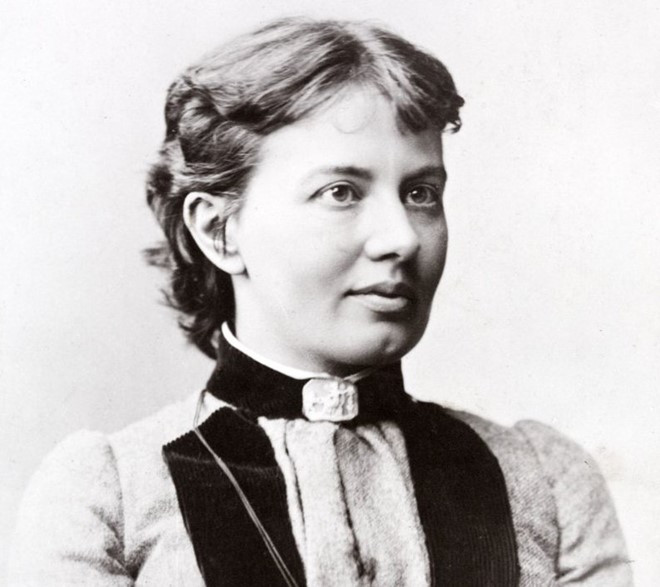
The Russian female mathematician made significant strides in mathematics. (Photo: Corbis).
Because Russian women were not allowed to attend university, Sofia Vasilyevna married a young paleontologist, Vladimir Kovalevsky, and they moved to Germany.
Despite not attending university, Kovalevskaya attended private tutoring sessions and eventually earned her doctorate after writing a dissertation on partial differential equations, Abel integrals, and Saturn's rings.
Following the death of her husband, Kovalevskaya was appointed a mathematics lecturer at Stockholm University, becoming the first woman in the region in Europe to be appointed a professor.
She then went on to make significant strides in mathematics, winning the Prix Bordin from the French Academy of Sciences in 1888 and the Swedish Academy's prize the following year.
5. Emmy Noether (1882 - 1935), German
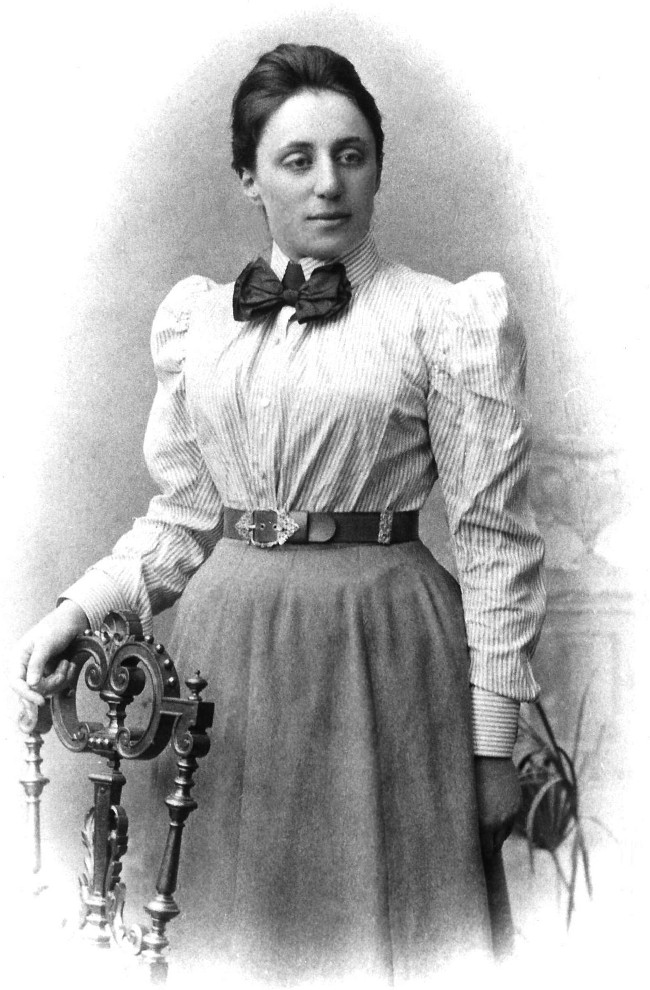
Emmy Noether collaborated with the renowned physicist Albert Einstein. (Photo: Smithsonian).
In 1935, shortly after Emmy Noether's death, Albert Einstein wrote a letter to the New York Times praising her as "the greatest innovative mathematical genius since the advancement of education for women."
Noether overcame many difficulties before she had the opportunity to collaborate with the renowned physicist Einstein. She grew up in Germany, and her mathematics studies were delayed due to rules regarding women at university.
After receiving her PhD in abstract algebra, she was unable to work at universities for many years. Eventually, Noether was granted the title of "unofficial associate professor" at the University of Göttingen. However, in 1933, she was banned from teaching in Göttingen because she was Jewish.
Noether later moved to the United States and became a lecturer and researcher at Bryn Mawr University and the Institute for Advanced Study in Princeton, New Jersey. She laid much of the mathematical foundation for Einstein's general theory of relativity and made significant advances in the field of algebra.
6. Emilie du Châtelet (1706-1749)
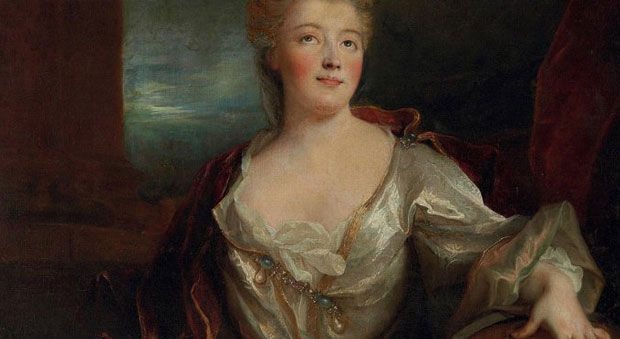
A French physicist, mathematician, and writer during the European Enlightenment, Emilie was fortunate enough to receive her degree at a time when women were not permitted to study and research at higher levels. In 1740, Châtelet published a book on philosophy and science called *Institutions de Physique*, which was later translated into *Newton's Mathematical Principles*, considered the most complete and accurate translation.
7. Maria Agnesi (1718-1799)
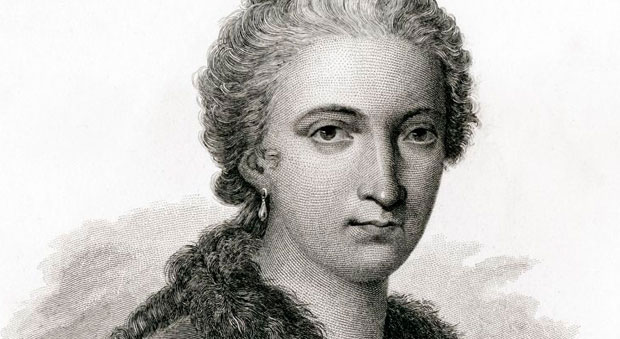
Maria Agnesi was an Italian philosopher and mathematician, known as the first woman to be appointed professor of mathematics and to have written a still-existing book on mathematics, 'Analytical Institutions for the Use of Italian Youth in English'.
8 . Mary Cartwright (1900-1998)
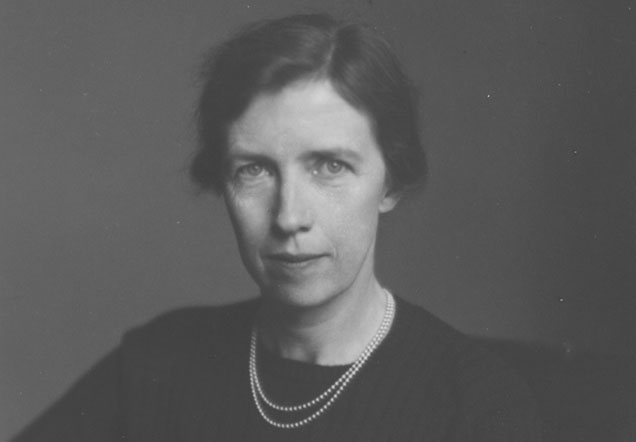
Cartwright was the first woman elected as a Fellow of the Royal Society and received the De Morgan Medal from the Order of the Society of London and the Sylvester London Medal of Mathematics from the Royal Society. She authored over 100 papers, including her research on curves, topology, and normal differential equations, among other things.
9. Julia Robinson (1919-1985)
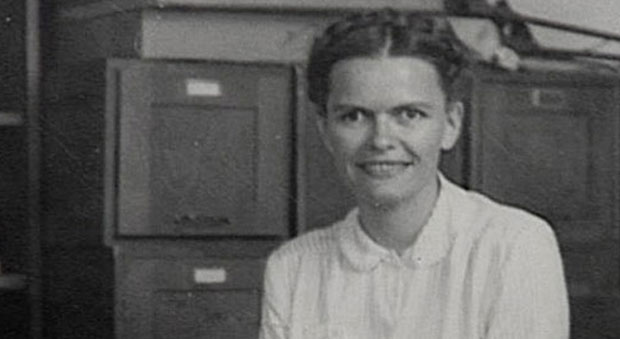
Despite suffering from illness throughout her short life, Robinson became the first female mathematician of the National Academy of Sciences and president of the American Academy of Arts and Sciences.
10. Shafi Goldwasser (1958)
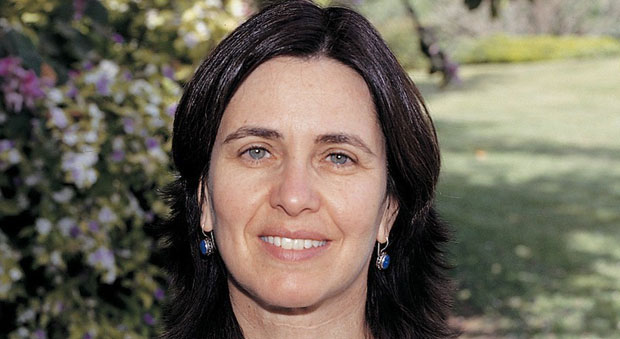
Goldwasser is an American professor of mathematics and computer science at the Weizmann Institute for Applied Sciences at MIT. Her research delves into zero-knowledge properties, complexity theory, number theory, and cryptographic computation. Her research in theoretical computer science has earned her two Gödel Prizes.