If you think people like Voltaire only knew how to write poetry and prose, you're mistaken. Hidden behind this famous philosopher was a brilliant mind with an incredibly keen sense of money.
Voltaire (1694 - 1778), whose real name was François-Marie Arouet , was a French writer, author, commentator, theologian, and philosopher. He was one of the most influential figures in the French Enlightenment intellectuals of the 18th century, with a vast body of work including novels, essays, plays, and numerous scholarly works.
Although primarily a writer, Voltaire wasn't just good at writing. He was also very astute in investment and possessed a natural business acumen – a fact proven by his unprecedented lottery win that kept him wealthy for life.
Voltaire's unfortunate accident turned into a stroke of luck.
In 1729, France faced a financial crisis, and the French government chose to issue bonds. To encourage people to buy as many bonds as possible, the leaders devised an ingenious solution: issuing a lottery .
Only those who bought bonds were eligible to buy lottery tickets, and Voltaire was one of them. At the time, he was in financial trouble.
The story begins when he met his friend, the mathematician Charles Marie de la Condamine, at a dinner. To help Voltaire make money quickly, de la Condamine told him about a loophole in the French lottery system .
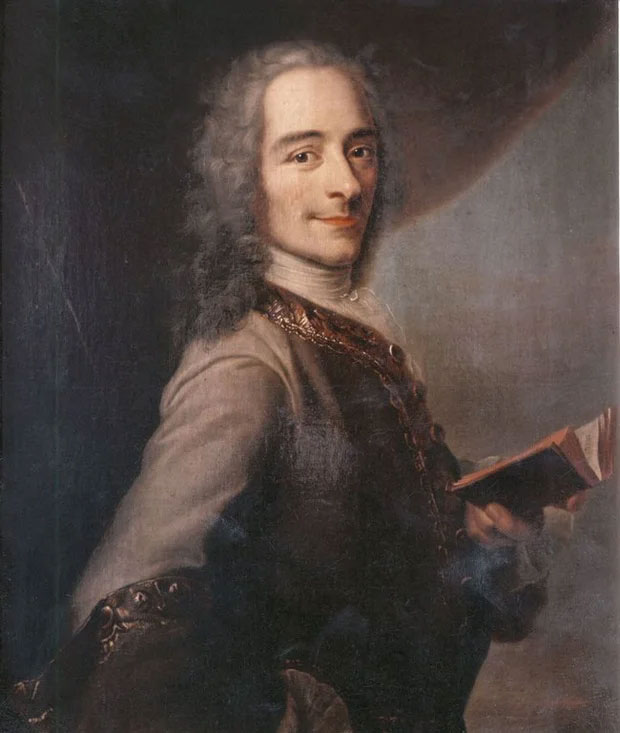
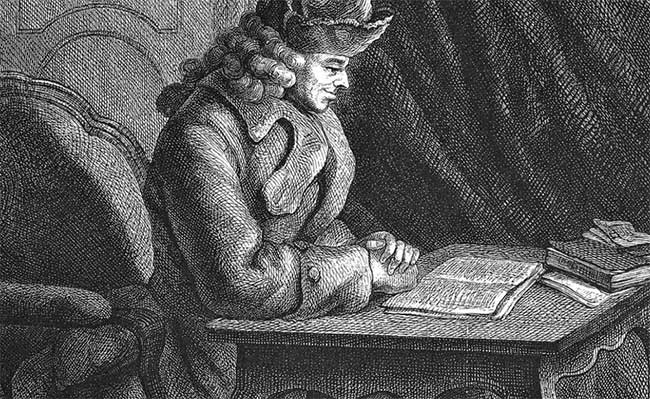
Portrait of Voltaire. (Photo: History).
The problem lies in the lottery tickets worth 1/1000th of a bond. Someone with a £100,000 bond can buy a ticket for £100. Someone with a £1,000 bond can buy a ticket for £1.
When you win the lottery, you receive an amount equivalent to the face value of your existing bonds. In addition, the winner also receives a jackpot prize of £500,000. (At that time, the French used the French pound; the franc was introduced after 1795).
500,000 pounds was an enormous sum of money back then. To put it into perspective, someone with an average annual income of 15,000 pounds was considered wealthy, while 30,000 pounds was extremely wealthy. If converted to today's exchange rate, 500,000 pounds would be equivalent to approximately 121 million USD.
The chances of winning the jackpot are the same whether you spend £100 or £1 on a lottery ticket. Not to mention, the French government doesn't even realize that the prize they award. is even larger than the revenue from all the lottery tickets sold!
The French government's mistake ultimately turned out to be an unexpected stroke of luck for Voltaire .
He planned it himself, and he exposed it himself.
According to de la Condamine's calculations, if they bought a certain number of bonds on the market, they were guaranteed to win the lottery. The amount spent on lottery tickets was not much (1 pound/ticket); they also received interest and the real value of the bonds that the French government offered as prizes.
To successfully pull off this scheme, the couple needed to attract numerous investors to purchase the necessary number of bonds to ensure victory. This is where Voltaire came into play. The philosopher was neither wealthy nor famous at the time, but he was exceptionally eloquent and had a wide network of contacts.
Voltaire and de la Condamine managed to attract many wealthy investors, thereby securing enough capital to purchase bonds and lottery tickets. The only obstacle was that there were only a few notaries issuing lottery tickets. If someone came to collect a ticket too many times, the scheme would quickly be discovered by the government.
Once again, Voltaire demonstrated his quick wit by persuading a notary public to act as an "insider" to issue lottery tickets for the group.
Initially, the plan was a resounding success. The group members earned a lot of money, and they shared the profits fairly and generously compensated those involved. To be safe, they signed for the rewards under several different fake names, so no one realized that this group was so "lucky" that they kept winning the lottery.
This spectacular " lottery win" unfolded over a period of two years, before being partially exposed by Voltaire himself . The reason was simple: because… he wanted it that way.
Typically, people write good luck wishes on the back of lottery tickets. But Voltaire chose not to do that.
Instead, he revealed part of the plan and the name of the person behind it, such as: "This ticket is dedicated to the brilliant idea of Marie de la Condamine ." Voltaire then signed the ticket using a series of pseudonyms that the group continued to use.
Eventually, the French government realized the long-standing flaw in its lottery system. They quickly figured out who was behind the scheme. The French Finance Minister even sued Voltaire and his friends. However, because the group hadn't done anything illegal, and the system was poorly constructed, the court allowed them to keep all the winnings.
The brilliant investment mind of a talented writer.
The French government subsequently "disbanded" the lottery system after Voltaire's scheme was exposed. They even tried to change the law, but by then Voltaire had amassed over half a million French pounds and become incredibly wealthy.
Of course, being a shrewd man, Voltaire didn't spend the money immediately, but instead used it to invest and "buy" himself freedom.
He began to associate with the wealthy, investors, and bankers. They taught him how to invest, predict money prices, and manage his finances.
In September of that year, Voltaire heard that a promising company in Lorraine was about to issue shares. However, the company only accepted investment from local people. After some investigation, he confirmed that the surname Arouet in his real name had Lorraine origins.
Voltaire became rich very quickly. (Photo: Kristeligt Dagblad).
"After my earnest pleading, they allowed me to buy 50 shares and delivered them a week later. I quickly seized the opportunity and tripled my investment ," he wrote in a letter.
Voltaire's fortune grew even larger after he inherited his estate. Previously, the writer had a conflict with his father, almost excluding him from the will. However, perhaps unwilling to accept this, his father stipulated that Voltaire would receive a share of the inheritance if he could prove himself a good person after the age of 35.
That year coincidentally was also the date mentioned in the will. Voltaire used his culinary skills to successfully persuade the President of the Court, Jean-Aymard de Nicolaï, to return his inheritance to him. Strangely, this was the same man who had refused to lend him £20,000 of his inheritance four years earlier.
The £153,000 inheritance, along with his prior savings, allowed Voltaire to compose freely without fear of repercussions. This wealth enabled him to live comfortably even while fleeing the wrath of city authorities or while being expelled from Paris. Without this money, Voltaire would likely have faced execution or a lifetime in prison.
At age 55, Voltaire's annual income was £80,000 (equivalent to $600,000 today). He also earned an additional £45,000 per year from passive investments around the world (equivalent to $337,000 today).
Speaking about his wealth and life largely based on passive income, Voltaire said: "God has given us the gift of life; we must allow ourselves to live comfortably . "
- Earth enters the "red zone," hit by a cosmic fireball today.
- Writing emerged by chance in the Middle East.
- Excavation of the remains of Mendel, the "father" of genetics.