While hoping that the boom in electric vehicles and green energy will bring wealth, the people of this nation are apprehensive about repeating past mistakes.
The Potosí mountain region in southern Bolivia was one of the richest areas in the Spanish Empire. In the 16th and 17th centuries, more than half of the world's silver originated from a single mountain in the region. The seemingly barren landscape of Potosí has since yielded a wealth of other valuable minerals, including aluminum, lead, and zinc.
In the 19th century, a British company built a railway line to transport minerals from Bolivia to the Chilean coast. From there, the minerals were transported to Europe. Potosí, where the railway junction connects Bolivia's administrative capital La Paz with Chile and Argentina, remains an important transport hub.
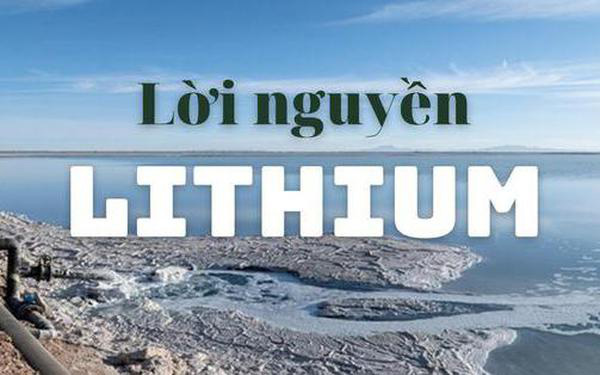
Lithium is a lightweight and soft metal, used in batteries for smartphones, electric vehicles, and more.
However, the wealth created by the Potosí land over the centuries has remained largely in Bolivia. Potosí is the poorest region of Bolivia, and Bolivia is the second poorest country in South America.
More than two-thirds of the Potosinos population live in houses made of brick or mud. During the rainy season, when the red clay turns into mud, the unpaved roads in the area become impassable.
The people here lack adequate healthcare, and children do not receive a full education. A quarter of women still give birth at home. Nearly 40% of adults have only completed primary school, and another 20% have never been to school.
The poverty of Potosí is all the more striking given that it is home to the world's largest lithium mine. Lithium is a lightweight and soft metal used in batteries for smartphones, computers, and electric vehicles.
This mineral was discovered in the Uyuni salt flats in the 1970s. As the world moves toward greener forms of energy, this mineral is becoming increasingly sought after.
To capitalize on that increased demand, in 2013 the Bolivian government opened a lithium production plant on a corner of the salt flats. The solid white land, spanning 10,000 square kilometers, sits atop the Andes and is 1 kilometer higher than the city of Machu Picchu in neighboring Peru.
The nearby communities, already among the wealthiest in Potosí, have yet to benefit from the mining. In a way, their lives have become even more difficult than ever before.
Tourism, a source of income for many, has dried up during the pandemic. Climate change has led to severe droughts. As a result, traditional industries such as quinoa farming and llama breeding have become precarious.
Some locals make a living from the meager income of salt. Harvesting salt is a laborious process involving a truck, a tractor, and men wielding shovels, wearing long-sleeved shirts to protect themselves from the harsh sun.
However, it doesn't rain as much as it used to. Therefore, the layer of salt crystals that forms annually is no longer as thick as before. People are worried that the water-intensive lithium production process will exacerbate the water shortage in the area.
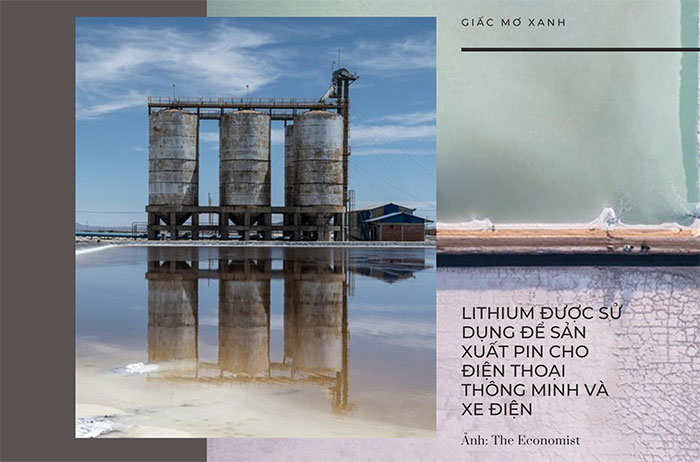
If Potosí is looking to escape poverty, his best bet is his nascent lithium industry. But can it avoid being exploited, as has happened so many times before?
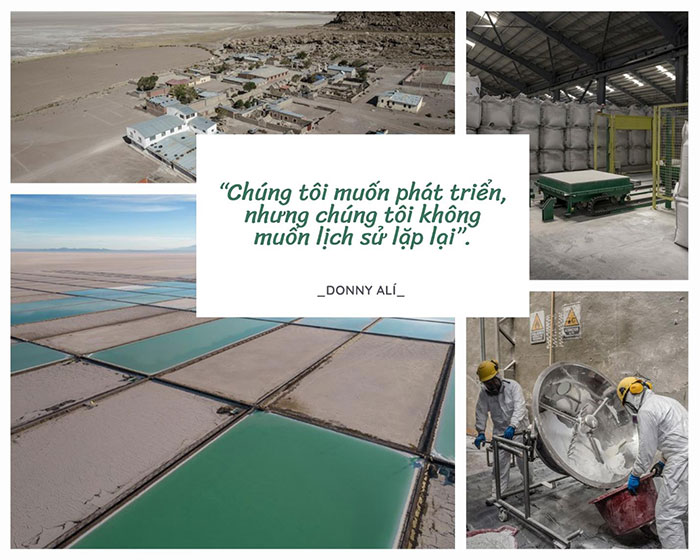
Donny Alí, 34, a lawyer and hotel owner in Rio Grande, a town of about 2,000 people on the southern edge of the salt flats, said: " We want to develop, but we don't want history to repeat itself."
Alí said that when he was a child, his parents taught him " not to trust any foreigner who talks about our natural resources ." Greedy foreign companies, allowed by the Bolivian government, have proliferated rapidly, leaving Alí's town impoverished for centuries.
In the 1990s, members of his family protested the government's decision to grant exclusive mining rights to the entire salt field to the Canadian company LitCo. Once again, it seemed the local community would lose everything. Thanks to their protest, the contract was eventually revoked.
Alí and his seven siblings were among the first residents of the Rio Grande to attend university. He says his siblings were able to go to school thanks to their mother. She dropped out of school at age seven and earned a living selling street food. She convinced her husband, a railway porter, to move the whole family to Uyuni, a larger town on the other side of the salt flats. Unlike the Rio Grande, it had a high school.
All seven siblings attended university in the nearby city of Sucre. At one point, six of them were crammed into boarding houses. Each week, they received a package containing quinoa, bread, and dried meat from relatives in the Rio Grande, where cheaper staples were sent.
It was a hopeful time in Potosí. Former President Evo Morales, who governed Bolivia from 2006 to 2019, banned foreign companies from controlling stakes in the mining sector. Instead, he promised to help Bolivia create its own lithium industry .
In 2013, when a lithium production plant opened on the outskirts of Rio Grande, residents rejoiced as their town became "the heart of the white gold industry ."
As a member of the town council at the time, Alí helped negotiate an agreement with the state-owned lithium company Yacimientos de Litio Bolivianos. The plant would gain access to the village's water supply in exchange for residents from the Rio Grande becoming truck drivers transporting lithium carbonate and potassium chloride.
Planta Llipi is described as a massive complex enclosed by a high metal fence. The factory buildings, warehouses, laboratories, and 160 pools filled with bluish-white salt are spaced far enough apart for workers to drive trucks between them.
When the plant opened, optimists believed that lithium would help bring Bolivia into the modern world, creating jobs and driving regional development.
Many families in the Rio Grande formed a cooperative, buying trucks in anticipation of the upcoming lithium boom. They thought they were also transporting other goods besides lithium, from nearby bauxite and ulexite mines. (Bauxite, essentially red mud, is used in industrial chemicals and building materials. Ulexite contains boron, which is used in fertilizers and fiber optics.)
In Rio Grande, construction also boomed. New houses sprang up. A modern town hall with large windows. A school and a stadium were also built. Alí built a two-story hotel on a busy street corner and named it Lithium. He also opened a shop where future guests could buy snacks.
But converting lithium into gold presents an unprecedented challenge.
Although the truck drivers' association has helped make the Rio Grande more vibrant than the surrounding salt flat communities, the contract with the state-owned lithium company has yielded less profit than the drivers had hoped.
Some of them drove trucks carrying lithium carbonate between buildings inside the plant. But drivers from elsewhere were often favored for trips to larger cities like La Paz and Santa Cruz, where potassium chloride and lithium carbonate were exported.
The foreign investors Alí had hoped for have yet to arrive. The plant produced 600 tons of lithium carbonate in 2021. Meanwhile, Chile and Argentina produced 134,000 and 36,000 tons, respectively. Lithium mining is complicated, especially in Bolivia, due to the high magnesium content in the brine, and more importantly, due to a lack of local technology.
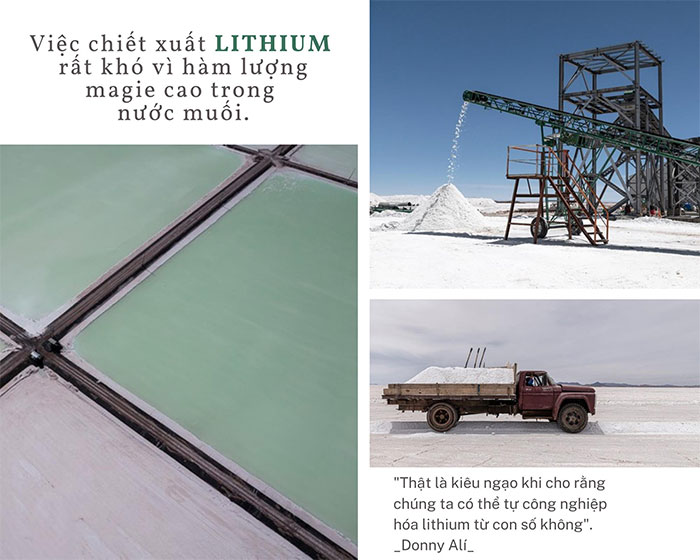
That's one of the reasons why the jobs that locals hoped for haven't materialized. Natalio Cayo, the former mayor of Chuvica, a village near the salt flats, says that in 2020, the government asked him to compile a list of villagers suitable for factory work. However, those he recommended have yet to be contacted. Cayo says it was naive to think that lithium would provide jobs for so many locals.
In recent years, half the people in his village have left to find work elsewhere. On the dusty roads, weeds grow from the abandoned truck beds.
Rio Grande has plans to build a new high school specializing in chemistry, hoping to train a new generation to work in the lithium industry. Truck driver Jonas, Alí's cousin, said he longs to see his two sons in white lab coats. " I never had the chance to go to school, " he said.
But building a workforce with the right skills takes a lot of time. This is a reality that Bolivian President Luis Arce acknowledged back in 2020. Unlike his predecessor Morales, Arce wanted to build partnerships with foreign companies that could help develop technology to boost production.
Donny Alí, like many others in Rio Grande, had the idea of foreign investment. He said, " It would be arrogant to think we could industrialize lithium from scratch ."
In 2021, Alí moved to La Paz to work on lithium policy for the national energy ministry, after the government bowed to local demands for a voice in the federal government. But just a year later, he quit and returned to Rio Grande, frustrated by the backwardness.
He remains concerned that Bolivia might repeat the mistakes of the past. He believes that local communities must be consulted before any agreements are signed and that they deserve a fair share of royalties. Meanwhile, his Lithium Hotel remains deserted.
- Little-known stories about the treasure "reborn" at Co Loa Citadel, President Ho Chi Minh's visit and explanation.
- Amazon introduces its most powerful ARM CPU ever: 64 cores with 55 billion transistors.
- The 12-sided bronze octahedron: A historical mystery of a civilization.