Ancient Chinese history boasts numerous strategists who have left a legacy of admiration for posterity. Many of them were outstanding talents with illustrious reputations, passed down through generations. While it's difficult to identify the best among all these strategists, the following ten names can be considered among the most prominent in ancient China.
Famous strategists of ancient China
- 1. Jiang Ziya (1156 - 1017 BC)
- 2. Sun Tzu
- 3. Zhang Liang (250 - 186 BC)
- 4. Zhuge Liang (181 - 234)
- 5. Wang Meng (325 - 375)
- 6. Zhao Pu (922 - 992)
- 7. Liu Ji (1311 - 1375)
- 8. Yao Guangxiao (1335 - 1418)
- 9. Ta Thanh Tri Nang – Pham Van Trinh (1597 - 1666)
- 10. Ly Bi
1. Jiang Ziya (1156 - 1017 BC)
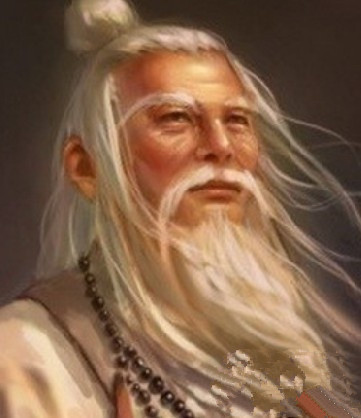
The brilliant strategist Jiang Ziya
Jiang Ziya , originally named Jiang Wang, also known as Ziya, belonged to the Jiang clan. Later, he migrated to Lü (southwest of present-day Yangzhou, Henan) and changed his surname to Lü. As the Grand Envoy of the Zhou Dynasty, he was honored as the " Senior Father of the Army," hence he was later known as Lü Shang. He assisted King Wu of Zhou in overthrowing the Shang Dynasty and also founded the State of Qi. For his contributions, he was granted the land of Qi and became the founder of the State of Qi during the Zhou Dynasty. As the ruler of a vassal state, Lü Shang implemented wise and skillful policies to win the hearts of the people, such as respecting local customs, simplifying cumbersome rituals, developing commerce and industry, and exploiting the resources of fishing and salt production. The later rise of Qi as a powerful state throughout the Western and Eastern Zhou dynasties was largely due to Lü Shang's pioneering efforts.
In Chinese history, Jiang Ziya was the most famous politician, military strategist, and strategist. Jiang Ziya lived to be 139 years old. A Chinese folk saying goes, "Jiang Ziya came first, Sun Tzu came second; five hundred years before Zhuge Liang, five hundred years after Liu Bowen."
Many legends have circulated about his life before he joined the Zhou dynasty, most of which mention that "Lü Wang was a descendant of a declining noble family at the end of the Shang dynasty. In his youth, he received an education reserved for the nobility, thus possessing profound knowledge. Later, due to many hardships in life and not being appreciated by King Zhou, he wandered throughout the country and eventually settled down to fish by the Wei River, waiting for his time." This anecdote is the subject of the painting depicting an old man casting a fishing rod by the Wei River. Later, King Wen of Zhou arrived, met and conversed with him, discovered his exceptional talent, and welcomed him, appointing him Grand Tutor - the highest official position in both military and political affairs at the beginning of the Zhou dynasty.
2. Sun Tzu
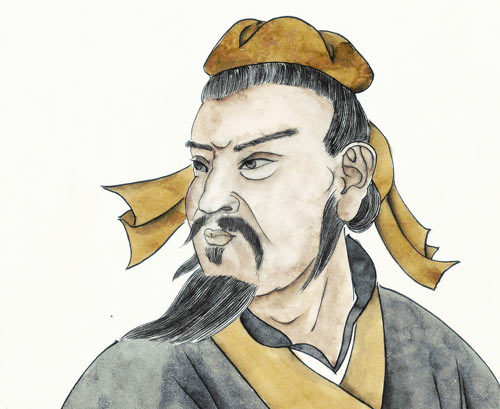
The brilliant strategist Sun Tzu
Sun Bin was a renowned strategist during the Warring States period, a descendant of Sun Tzu . In his youth, he studied military strategy with Pang Juan under Gui Guzi . After Pang Juan became a general in the Wei Dynasty, he became jealous of Sun Bin's talent and tricked him into going to Wei, where he falsely accused him, resulting in Sun Bin having his kneecaps severed (Tín punishment). The character "Tín" in his name originates from this punishment. Later, he was brought to Qi by an envoy from the State of Qi. The Qi general, Tian Ji, admired Sun Bin's talent and petitioned King Wei of Qi to appoint him as his teacher. At that time, King Wei of Qi was in conflict with Wei and, wanting to recruit talented individuals, valued Sun Bin's military prowess and accepted him into his military service. His "Art of War" (Sun Bin's Art of War) is a continuation of Sun Tzu's military thought.
3. Zhang Liang (250 - 186 BC)
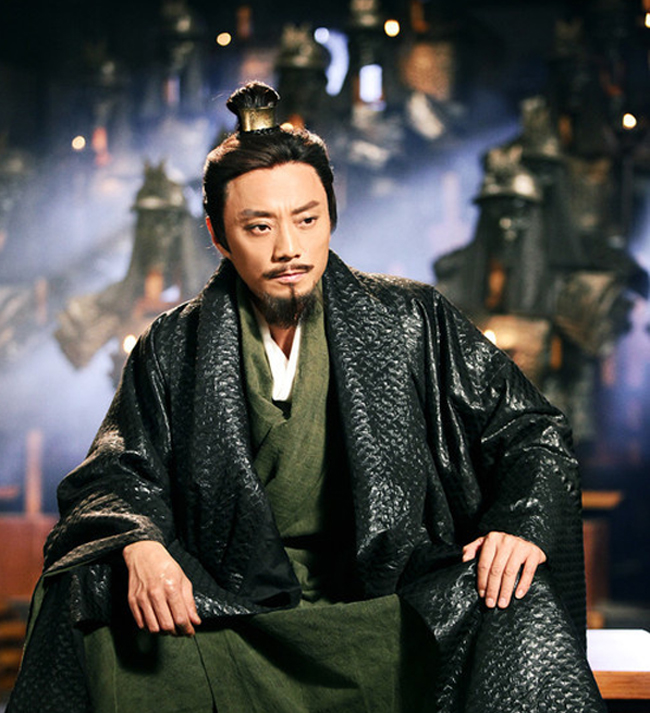
Zhang Hanyu played Zhang Liang in the film "Hongmen Banquet".
Zhang Liang , whose courtesy name was Zifang, was a strategist under Emperor Gaozu of Han, Liu Bang . He was an outstanding military and political figure during the late Qin and early Han dynasties. He played a major role in the founding of the Han dynasty. Zhang Liang is considered one of the three most talented individuals of the early Han dynasty (Zhang Liang, Han Xin, and Xiao He).
Because of his meritorious service in the Han-Chu War, Zhang Liang was highly respected by Liu Bang (also known as Emperor Gaozu of Han), who remarked: "In strategizing within the tent and deciding victories thousands of miles away, I am no match for Zhang Liang." He offered him a territory of 30,000 households in Qi to be granted, but Zhang Liang declined, only requesting to be granted territory in Liu—a much smaller area where Zhang Liang had met Liu Bang before. Emperor Gaozu then bestowed upon him the title of Marquis of Liu.
Zhang Liang's talent in assisting Liu Bang in establishing the Han dynasty demonstrated his far-sighted political vision, keen psychological analytical skills, sharp strategic insight, and skillful ability to win people's hearts and minds.
In his later years, Zhang Liang lived as a hermit. When writing the Records of the Grand Historian, the famous historian Sima Qian placed stories about him in the section on aristocratic families , which was reserved for vassal states, high-ranking members of the nobility, and famous figures such as Chen She (also known as Chen Sheng) or Confucius, while only placing stories about Han Xin in the section on biographies (less important people or events).
4. Zhuge Liang (181 - 234)
The prophet Zhuge Liang
According to the open encyclopedia, Zhuge Liang (181-234), courtesy name Kongming , and pen name Mr. Wolong, was an outstanding strategist of Liu Bei of the Shu Kingdom during the late Han Dynasty. Zhuge Liang was born in Yangdu (now in Yinan County, Shandong Province). He was a renowned military strategist, politician, essayist, and inventor in Chinese history, famous for military tactics such as the Eight Battle Formations , the Repeating Crossbow, and the Wooden Ox and Mechanical Horse.
Zhuge Liang was invited by Liu Bei to serve as an official, accompanying Liu Bei on various battlefields, helping to establish the Shu Han kingdom, and was appointed Prime Minister. In 223, after Liu Bei's death, Liu Shan succeeded him as Emperor of Shu Han, and Zhuge Liang was granted the title of Marquis of Wu, becoming the supreme military and political leader of Shu Han. After his death, he was posthumously granted the title of Marquis of Zhongwu, hence he is often referred to as Zhuge Wu Hou or simply Wu Hou.
5. Wang Meng (325 - 375)
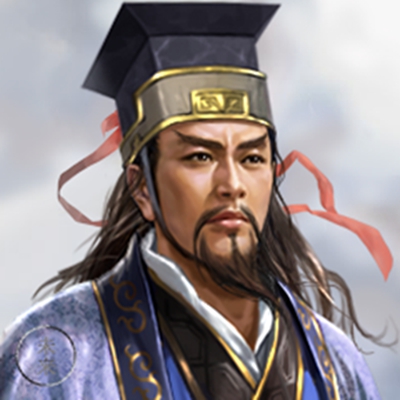
Famous military strategist Wang Meng
Wang Meng, whose courtesy name was Jinglue , was from Beihai during the Eastern Jin Dynasty. He was a renowned politician and military strategist of the Sixteen Kingdoms period, serving as Prime Minister of the Former Qin Dynasty, a Grand General, and an assistant to Fu Jian in pacifying the empire and unifying the north. Although he lived in poverty in his youth, Wang Meng loved to study and read military treatises. He was cautious, possessed an extraordinary demeanor, and was not bothered by trivial matters. He rarely socialized and had few connections, which led to him being scorned by scholars of his time. However, Wang Meng did not feel saddened by this.
6. Zhao Pu (922 - 992)
Statue of Zhao Pu
Zhao Pu , whose courtesy name was Zeping, was an outstanding politician of the early Northern Song Dynasty and a renowned strategist in Chinese history. Zhao Pu served as a general three times, rose to prominence during one dynasty, and ruled for 50 years, dying at the age of 71. Zhao Pu read little but possessed remarkable intelligence and strategic thinking. His only known work is "Half a copy of the Analects of Confucius on Governing the World."
7. Liu Ji (1311 - 1375)
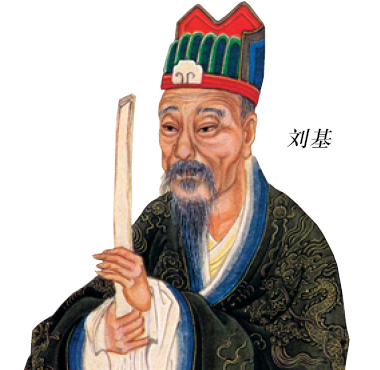
The brilliant strategist Liu Ji
Liu Ji , whose courtesy name was Baowen , was born in 1311 in Yangwu Village, Qingdian County. He was an outstanding military strategist at the end of the Yuan Dynasty and the beginning of the Ming Dynasty. He was also a politician, writer, and philosopher, knowledgeable in history, astronomy, and military strategy. He was Han Chinese and a founding minister of the Ming Dynasty.
Liu Bowen was a founding minister of the Ming Dynasty in Chinese history. He was born into a Confucian family with a tradition of bravely fighting against the Mongol invaders. Thanks to his diligence and passion for reading, he quickly mastered classical literature, military strategy, and astronomy. In the first year of Yuan Tong of Emperor Shun of Yuan (1333), he passed the imperial examination and earned a doctorate, and was appointed to an official position. However, due to oppression and criticism, he retired to live in seclusion in 1360.
After becoming Zhu Yuanzhang 's brilliant strategist , he helped Zhu Yuanzhang defeat various warlord factions such as Chen Youliang and Zhang Shicheng, repeatedly turning dangerous situations into safe ones. Important victories at Taiping, Anqing, Jiangzhou, and Poyang Lake against Chen Youliang, at Jiande against Zhang Shicheng, as well as the surrender of Fang Guozhen and many other local forces, were all orchestrated by Liu Bowen. Particularly at Poyang Lake, he directly commanded the battle alongside Zhu Yuanzhang and once saved Zhu Yuanzhang from being hit by enemy artillery fire.
8. Yao Guangxiao (1335 - 1418)
His childhood name was Thien Hi, but he later became famous as Quang Hieu, his Buddhist name was Dao Dien, and his pseudonym was Doc Am Lao Nhan. He was from the Hanh Trung Thu Giang-Zhe region during the late Yuan and early Ming dynasties (now Suzhou city, Jiangsu province). He was a poet, politician, and Buddhist monk, and one of Emperor Ming Chengzu's most trusted advisors.
During the late Hongwu and early Yongle periods, the political landscape of China underwent dramatic shifts, causing earth-shattering changes. Yao Guangxiao was the strategist who, while seated in his tent, commanded vast armies outside, deciding victories and defeats from thousands of miles away. He was one of the founding fathers of the Ming Dynasty under Emperor Chengzu, a man of immense merit.
9. Ta Thanh Tri Nang – Pham Van Trinh (1597 - 1666)
Pham Van Trinh, whose courtesy name was Hien Dau and pen name was Huy Nhac, was from Liaodong, Shenyang. He was a lover of books, sharp-witted, thoughtful, and resolute. In 1615, at the age of 18, he passed the imperial examination and then joined the army of Nurhaci (Tianming Khan), remaining loyal to the Qing dynasty and leaving behind many great contributions.
In the third year of the Tian Tong era (1629), Wen Cheng again participated in the attack on the Ming dynasty, entering Ji Men and capturing Xun Hua. Wen Cheng personally led 1000 troops to attack Pan Jia Kou, Ma Lan Yu, Tam Don Doanh, Ma Lan Quan, and Da An Kou, capturing all five cities. Afterwards, the Ming army besieged Da An Kou, but Wen Cheng used cannons to break the siege. Huang Tai Ji personally led troops to attack Yong Ping, leaving Wen Cheng to guard Xun Hua. When the Ming army suddenly arrived, he led the charge, fighting fiercely, and the enemy was defeated and fled. For his meritorious service, he was awarded the title of guerrilla commander.
After achieving a successful and fulfilling career, Pham Van Trinh retired and left the officialdom to live a peaceful life in his old age. He passed away in the 5th year of Kangxi (1666), at the age of 70. Kangxi bestowed upon him the title 'Nguyen Phu Cao Phong'.
10. Ly Bi
His given name was Trường Nguyên, a prime minister during the Tang Dynasty, from Kinh Bắc, with ancestors from Liêu Đông. Lý Bí was the sixth-generation descendant of Lý Bật, one of the Eight Pillars of State of Western Wei. His father was Lý Thừa Hưu, the magistrate of Ngô Phòng district. His wife was from the Chu family, and his study contained over 20,000 books, but he forbade any of his descendants from selling them.
As a child, Lý Bí lived in Trường An. At the age of 7, he could read, and at 9, he displayed extraordinary talent, leading Emperor Huyền Tông to summon him to the Eastern Palace to serve the Crown Prince. He composed essays and poems praising the nation, including the line: 'The willows at the eastern gate are green and withered, the year's feast has passed,' before he retired to Toánh Dương.
During the reign of Emperor Suzong of Tang, he participated in the Grand Council of the State, was appointed as the Silver and Green Grand Officer of the Imperial Court, and lived in seclusion on Mount Hengshan (now in Hunan) until March of the 4th year of Zhenyuan (788), when he passed away, leaving behind a collection of 12 books.
- The horrifying secret hidden in the tomb of China's most "monstrous" eunuch.
- The painful castration process of Chinese eunuchs