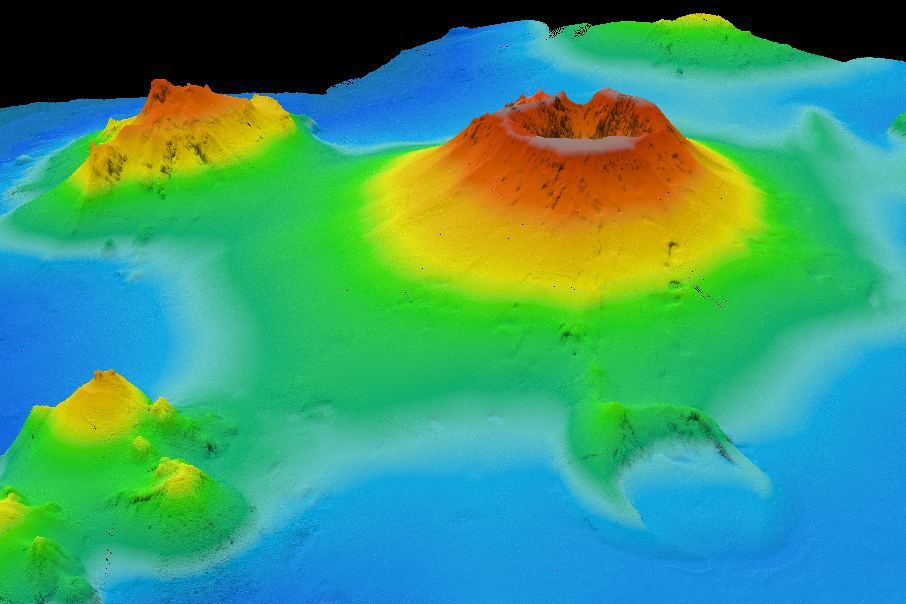
The footage was taken by an autonomous vehicle dropped into the Izu-Ogasawara Trench in southern Japan, the BBC reported on April 2 .
Record
Professor Alan Jamieson, a leading expert on the seabed at the University of Western Australia, said the snailfish was likely at the maximum depth at which the species can survive , or very close to it.
The previous record-breaking fish sighting was made 8,178m below the surface , further south in the Pacific Ocean in the Mariana Trench. This discovery beats that record by 158m.
'If this depth record is ever to be broken it will only be a few metres deeper ,' Professor Jamieson told the BBC.
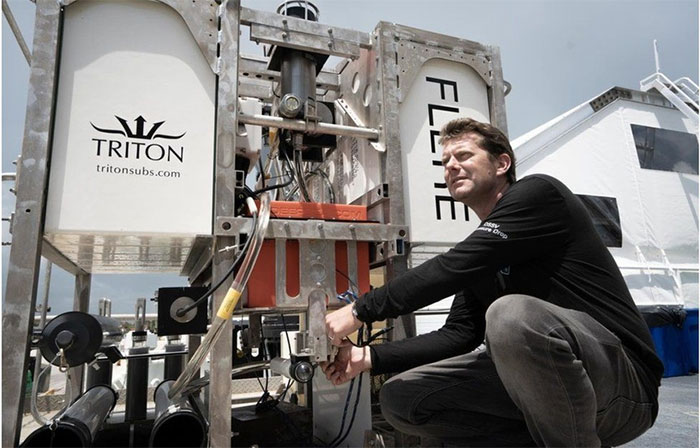
Professor Alan Jamieson is a pioneer in using underwater vehicles to explore the deep sea. (Photo: Fivedeeps.com).
Mr Jamieson predicted 10 years ago that the fish would likely be found at depths of 8,200-8,400 metres. A decade of exploration and global investigation has confirmed this.
The juvenile Pseudoliparis fish was observed. It was filmed using a camera system attached to a heavy frame dropped from the side of the DSSV Pressure Drop . Scientists attached bait to the frame to attract marine life.
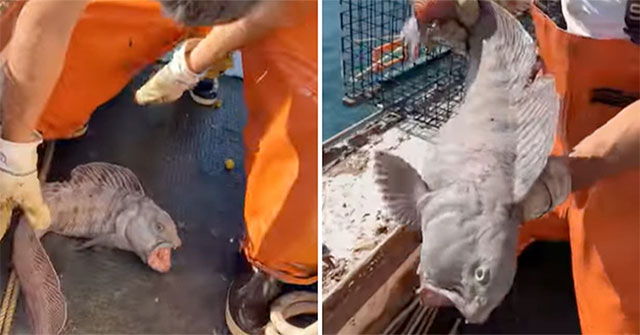
Although the snailfish in question was not brought up for full identification, several other snailfish have been caught in slightly higher waters in the nearby Japan Trench at a depth of 8,022 m. They set the record for the deepest-sea fish ever caught.
Equivalent to being crushed by 1,600 elephants
Snail fish are truly remarkable creatures. There are over 300 species of them, most of which live in shallow water and can be found in estuaries.
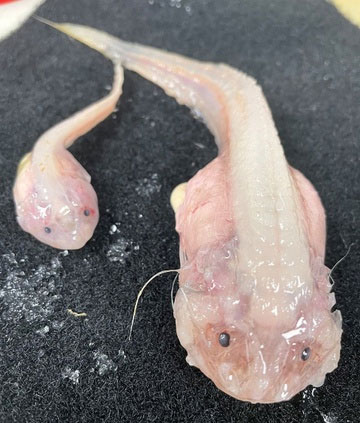
Some snailfish of the genus Pseudoliparis were caught at a depth of 8,022m. (Photo: Minderoo-UWA Deep Sea Research Centre).
But there are genera of snailfish that have also adapted to life in the cold waters of the Arctic and Antarctic, as well as in the extreme pressure conditions that exist in the world's deepest trenches.
At a depth of 8km, they are under pressure of more than 80 megapascals, or 800 times the pressure at the ocean's surface. Scientists estimate this water pressure is equivalent to being crushed by 1,600 elephants.
The lack of a swim bladder, a gas-filled organ to control buoyancy, like many other fish, is thought to give the snailfish an advantage.
Likewise, their approach to food also contributes to their extraordinary stress tolerance. Snailfish are scavengers and consume small crustaceans, of which there are many in the channels.
Professor Jamieson believes the discovery of a fish species that lives deeper than those found in the Mariana Trench is probably due to the slightly warmer waters of the Izu-Ogasawara.
'We predicted the deepest fish there would be and we predicted it would be a snailfish,' he said .
'I get frustrated when people tell me we don't know anything about the deep sea. And we do. Things are changing very quickly ,' the expert said.
To date, nearly a quarter of the Earth's seafloor has been mapped.
Professor Jamieson is the founder of the Minderoo-UWA Centre for Deep Sea Research. On the aforementioned expedition, which also explored the Ryukyu Trench, he worked with a team from the Tokyo University of Marine Science and Technology.
The DSSV Pressure Drop with the crewed submarine Limiting Factor was used by American explorer Victor Vescovo in 2018 and 2019 to visit the deepest areas of the Earth's five oceans.
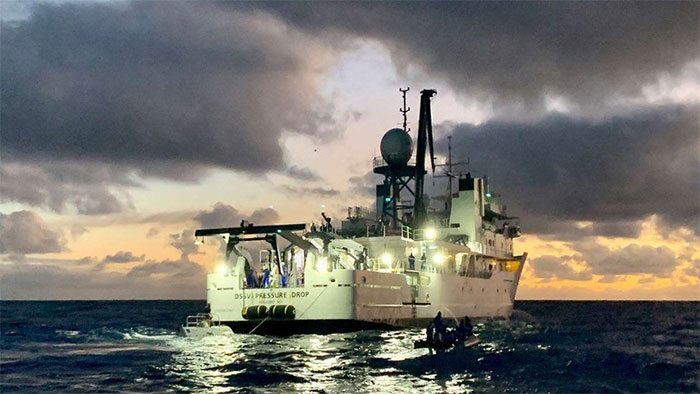
The DSSV Pressure Drop is now owned by Inkfish and renamed Dagon. (Photo: Fivedeeps.com).
The Texas explorer became the first person in history to make the deepest dive, with Professor Jamieson serving as his chief scientist.
The ship and submarine were sold last year to the marine research organization Inkfish and sent for refit in San Diego.
They have also been renamed – the ship is now Dagon and the submarine is Bakunawa – and will return to sea in June with Professor Jamieson once again acting as chief scientist.

Scientists use bait to lure marine life to the camera of the observation device. (Photo: Minderoo-UWA Deep Sea Research Centre).
Professor Jamieson, who was born in Scotland, is credited with discovering not only the deepest fish in the Earth's oceans, but also the deepest octopus, jellyfish and squid ever recorded.