Scientists at the Center for Research, Medicine and Pharmacology (Military Medical Academy) have successfully studied the method of prenatal diagnosis from the 7th week of pregnancy with embryonic DNA in maternal blood. This topic won the first prize of the 2007 Youth Military Academy Science-Technology Conference, which took place on December 15 in Ha Tay.
Scientists have conducted research on 89 pregnant mothers from 6 to 36 weeks in the age group from 19 to 43. With 5 ml of blood, the research team separated plasma, extracted DNA by hydrolysis method, precipitate, clean, then dissolve the DNA in water. Later, the scientists examined the DNA levels obtained and analyzed their DNA.
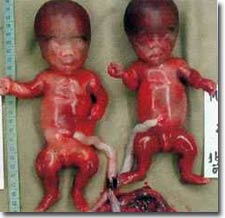
Fetal malformations due to genetic mutations.(Photo: Research Center for Biology, Medicine and Pharmacy).
As a result, after 89 births, 46 pregnant women were positive for the test and consistent with the diagnosis of postpartum diagnosis and 42 out of 43 people were negative for the test and appropriate for postpartum. Only one negative test case is not appropriate for postpartum. After re-checking the original case file, the case did not match the results of this postpartum, the scientists noted that the blood sample was frozen.
By this method, scientists can screen for some diseases caused by gene mutations on the X chromosome, such as Duchenne muscular atrophy, hemophilia, congenital immunodeficiency due to non-gamma globulin blood .
At the same time, scientists can diagnose diseases such as chorea (Huntington), congenital adrenal hyperplasia syndrome, marine anemia (thalassemia), dancers, cystic fibrocis, Rh disagreement of Rh blood between mother and fetus in case of mother with Rh (-) blood group, Rh (+) blood group . early determination of fetal sex .
According to Dr. Tran Van Khoa, Head of Genetic Technology and Cell Genetics Department said: "The advantage of this method is the early diagnosis of fetal malformations due to genetic mutations, which helps mothers feel secure during pregnancy. At the same time, this is the only method that can diagnose the disagreement of the RH blood group designated not to have amniocentesis and an undetectable ultrasound method. "
Dr. Khoa added that there are now many feasible methods for early diagnosis such as ultrasound, triple test, etc., which are non-interventional methods, but late diagnosis (after 12 weeks) and have low specificity. Characteristics of these two methods mainly detect morphological abnormalities, the risk of infection of the fetus but do not detect birth defects due to genetic mutations.
For intervention methods such as sucking amniotic fluid, vegetable biopsy . can cause some complications such as miscarriage, amniotic fluid leakage, amniotic fluid infection .
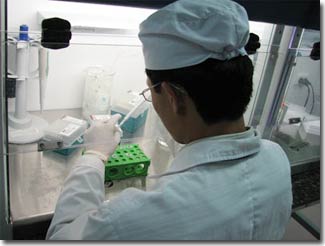
Dr. Ho Huu Tho is separating DNA philosophy in the laboratory at the Center for Biomedical, Medical and Pharmacology Research.(Photo: Ngoc Huyen).
According to the Chairman of the Scientific Council, Deputy Director of Military Medical Academy, Major General Prof. Dr. Le Bach Quang: "Each country has a proportion of children with birth defects according to each region and depending on the level exposure to toxins The treatment of birth defects is still very difficult and complicated, the success of this method helps doctors identify appropriate interventions early, contribute to relieve the burden on family and society ".
From September 6 until now, the Center for Research on Biomedical, Medical and Pharmaceutical Applications has tested for more than 100 pregnant mothers, detected 3 cases of dissenting RH blood group. The cost of testing for the detection of hereditary disease is VND 500,000. After 3 days, mothers can know the results.
However, not all pregnant mothers are assigned to do this test, the Center only tests for the following cases: Pregnant mothers are aged 35 or older; ever exposed to chemicals, radioactive substances; family history of people with genetic diseases; mother is sick, flu or improperly prescribed medication during pregnancy .
According to the statistics of the World Health Organization, the rate of birth defects accounts for 1.73%. In Vietnam, studies have also shown that birth defects are 2.4% to 3.6%.
Known, in addition to prenatal diagnosis, Department of Genetic Technology and Genetic Engineering (Research Center for Biology, Medicine, Pharmacology, - Military Medical Academy No.: 106-108 Phung Hung Street, Ward Phuc La, TP Ha Dong, Ha Tay Province Tel: 069826496) has conducted a blood-determination study for more than 400 cases, research on gene mutation and gene expression in cancer.
mystical gem