The article was professionally consulted by Associate Professor, Dr. Ho Sy Ha - Pediatric Center, Vinmec Times City International General Hospital. Dr. Ha has over 30 years of experience in pediatric cardiology, having worked for a long time at the National Children's Hospital.
'Kawasaki disease is a common disease in children under 5 years old, currently there are many cases of this disease in the US and Japan. In Vietnam, in recent years, many cases of the disease have also been recorded. So, what is Kawasaki disease? Is it dangerous?
What you need to know about Kawasaki disease
1. What is Kawasaki disease?
Kawasaki disease is an acute febrile illness with a generalized rash in young children, characterized by diffuse inflammation of small and medium-sized blood vessels throughout the body, including the coronary arteries that supply blood to the heart muscle.
The disease is named after a Japanese pediatrician who described the characteristic pattern of signs and symptoms of the disease in 1967. Kawasaki disease usually occurs in children under 5 years of age, and the incidence of the disease is usually higher in boys than in girls.
For more context, see White lung disease: Causes, symptoms and treatments.
The immediate consequences of Kawasaki disease may not be serious. However, cardiovascular manifestations are dangerous, such as carditis, coronary artery aneurysm causing sudden death, myocardial infarction in children or chronic coronary stenosis and insufficiency later.
Kawasaki disease is common in children under 5 years old, most commonly in breastfeeding age. The incidence of the disease in boys is often higher than in girls.
2. Causes of Kawasaki disease in children
The cause of Kawasaki disease is currently unknown. Most experts believe that the disease may be due to an infectious or toxic source such as a virus or bacteria; ethnic factors are also involved, as it is more common in children of Asian or Asian descent. In addition, environmental factors may be a cause of the disease. To date, there is no conclusive evidence that the disease is contagious.
3. Symptoms of Kawasaki disease
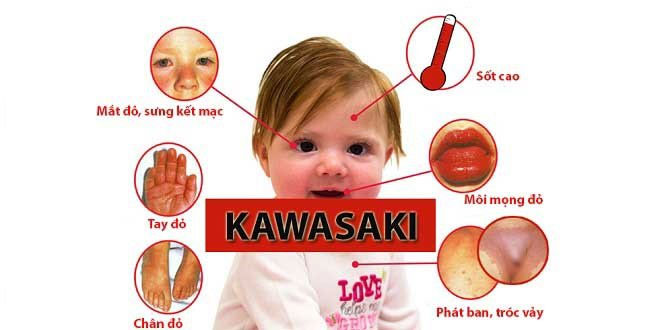
Some symptoms of children with Kawasaki disease.
Fever is the most common symptom, usually appearing first and lasting more than 5 days, with a characteristic of little response to antibiotics or conventional antipyretics.
- Conjunctiva is congested, red; usually without discharge, forms during the first week of illness.
- Lips are red and may crack and bleed.
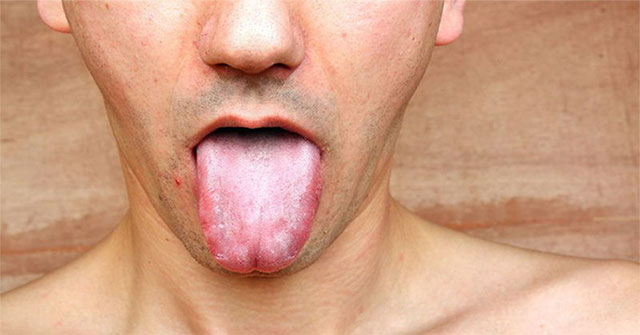
- The tongue is red and may have bumps.
- Rash usually appears early in the disease; erythema multiforme, generalized, is common.
- Symptoms in the extremities include swelling of the back of the hands and feet; purple palms and soles of the feet.
- Lymph nodes in the neck and jaw area may become swollen, usually on one side.
Symptoms of Kawasaki disease are often similar to many other acute fevers such as infections and tropical rash fever, while some symptoms progress like spontaneous remission, so the disease is easily overlooked or misdiagnosed with other diseases.
Therefore, if a child has a high fever for 3-4 days, accompanied by 2 or 3 of the following symptoms: red rash on the skin; red lips and red tongue with prickles; red eyes on both sides (conjunctivitis); swollen lymph nodes in the jaw angle, then you should think about Kawasaki disease and take your child to a hospital with a pediatric cardiology department as soon as possible.
4. Complications of Kawasaki disease
If not detected early and treated promptly, the clinical manifestations of the disease can spontaneously regress, however, complications of the disease in organs, especially coronary artery aneurysm complications, cause myocardial infarction or coronary artery stenosis and myocardial ischemia, chronic coronary failure. This rate occurs in about third of untreated cases.
5. Treatment of Kawasaki disease in children
Children with Kawasaki disease should be treated in the hospital. There, they will be given medications to prevent damage to the coronary arteries. These include:
- High-dose intravenous gamma globulin (IVIG) is the treatment of choice for patients with Kawasaki disease. It is effective in relieving symptoms and, more importantly, can prevent or reduce coronary artery damage if given within 10 days of the onset of fever.
- High-dose aspirin (ASA) is also given along with IVIG during the acute phase of the illness until the fever subsides.
With treatment, the disease usually gets better. Some children will need a second treatment with IVIG or other drugs.
In order for children to be diagnosed and treated accurately and effectively, avoiding possible complications, parents should choose leading reputable facilities.