Space science
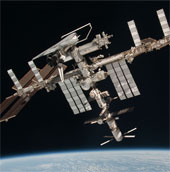
The US plans to continue the ISS program with Russia after 2020
In an interview with Russia's Izvestia newspaper on June 16, Mr. Fuller assessed that Russia and the US have built a unique and efficient space laboratory on ISS over th…
Browse ScienceInfo articles and explainers related to Russia.
1,190 published items.
In an interview with Russia's Izvestia newspaper on June 16, Mr. Fuller assessed that Russia and the US have built a unique and efficient space laboratory on ISS over th…
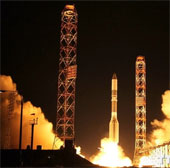
According to information from Voice of Russia, ITAR-TASS leads the Russian space industry, saying it intends to use Proton-M boosters until 2025.
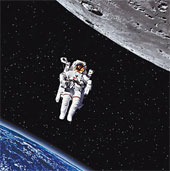
Russia has just developed a plan to bring people to life on the Moon and will send the first people here to build a long-term base in 2030.
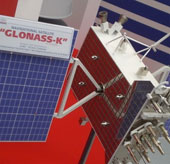
Accordingly, the Russian government passed bills on ratifying bilateral agreements with Vietnam and Nicaragua as the basis for developing bilateral relations in the fiel…
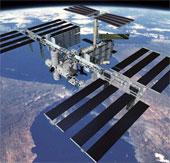
Rogozin said that after 2020, Russia wants to finance its more promising space research projects.

On April 19, people on the Russian island newspaper Kola witnessed a meteorite explosion. The explosion took place at 2 am (local time) and could be seen quite clearly.
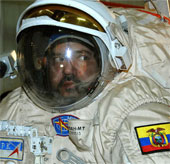
A Soviet spacecraft, which was launched twice in orbit in the late 70s of the last century, will be auctioned by German auctioneer Lempertz on May 7 in Brussels.
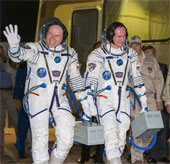
On the morning of March 11, the 38th international flight team worked on the International Space Station (ISS) safely brought back to Earth by the TMA-10M Spacecraft.
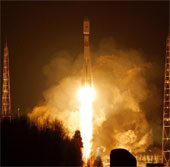
The Russian Ministry of Defense press on March 24 announced the launch of the Soyuz-2.1b rocket into space carrying the Glonass-M positioning satellite No. 54 from the P…
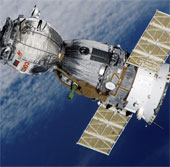
Spatial scientific research relations between the US and Russia continue to be maintained normally, despite the situation in Ukraine.
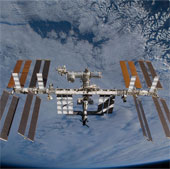
The Russian-made component on the International Space Station (ISS) can continue to be maintained as an independent agency after the project completes its mission and re…
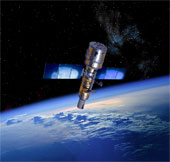
A Russian military spy satellite on February 16 caught fire in the process of friction with the atmosphere.
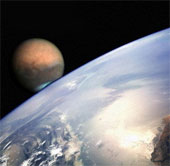
An invention by Russian scientists is participating in the design competition of future Mars self-propelled vehicles, organized by NASA space agency.
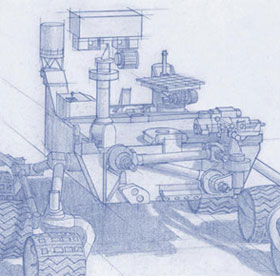
The device invented by the Russian Space Research Institute was one of 58 proposals sent to NASA in February.
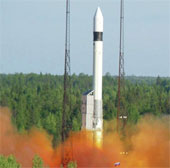
On the morning of December 25, Russia successfully launched a light-weight Rokot rocket from the northern Plesetsk space airport in the north, carrying Briz KM accelerat…