Space science
Finding the swallowing star 'neighbor'
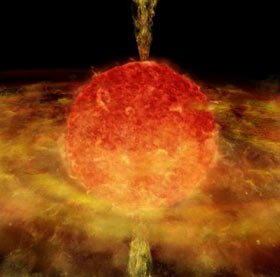
A star suspected of swallowing another star or planet next to it was found under the help of NASA's Chandra X-ray observatory.
Browse ScienceInfo articles and explainers related to Red.
1,787 published items.
A star suspected of swallowing another star or planet next to it was found under the help of NASA's Chandra X-ray observatory.

The ship 'virtual' to Mars with a 520 day and night journey, the third stage in the 'Mars - 500' project of the Y-Sinh Academy (Russian Academy of Sciences) 'departed' y…

Scientists claim that, at the time of today 3.5 billion years, 36% of the surface of Mars had been covered by seawater.
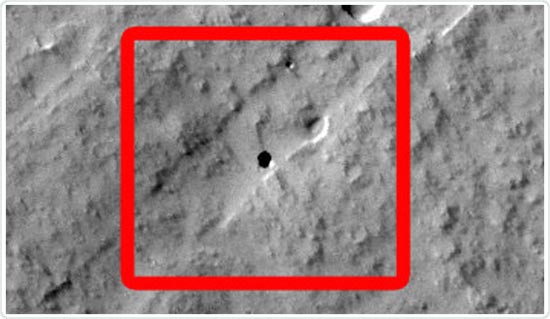
A group of 7-year-old students in California, the United States discovered a mysterious cave on Mars when participating in the research project of images operated by a N…

Current conditions on the red planet are extremely harsh for humans. To survive there, we must first spread a green carpet on the surface of this cold planet.

A series of new photos sent back to Earth by the Hubble Space Telescope showed the color of Pluto changing and the ice blocks on its surface moving.

The US Aeronautics Agency (NASA) has reported that it has not received any signals from Phoenix self-propelled probes on the red planet.

After more than 6 years Spirit rolled on the surface of the red planet, NASA officially said goodbye to this self-propelled device.

Science experiments 'Mars-500' flight simulation on the Red planet will begin at the end of March 2010.

An American spacecraft will be launched into space to find out if the probe is on Mars

Russian scientists are preparing plans to bring monkeys to the spacecraft to fly to the red planet.

US scientists have published a new map of Mars that shows there was a large ocean in the north and valleys lying around the planet's equator.

American spacecraft sends strange images on the red planet, including CO2 ice blocks, sand dunes, rocky cliffs and valleys.

After hearing the loud noise on the roof, Peter Welton looked up and saw a red object. Fortunately, it did not hit the instrument ...
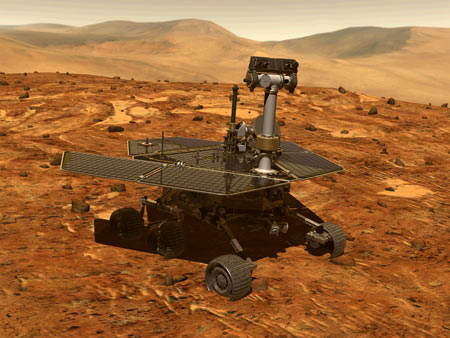
A new hypothesis suggests that Mars is not always red and explains why the planet is so red.