
Archeology
Mo Cao Cao - Archaeological conclusion can change!
Archaeological Professor Wang Xun said: Archaeological conclusions may change if false factors appear.
Browse ScienceInfo articles and explainers related to Tomb.
873 published items.
Archaeological Professor Wang Xun said: Archaeological conclusions may change if false factors appear.

Chinese anthropologists will collect DNA samples from people who may be descendants of Cao Cao to prove their identity as a tomb in Ha Nam.

Chinese archaeologists claim to have discovered a large tomb thought to be Cao Cao's resting place, a politician and a famous military talent at the end of the Eastern H…

In the grave of Cao Cao's tomb there are three skeletons, one male and two female, and the inscription

Some Chinese scholars argue that there is not enough evidence to confirm the tomb in Ha Nam is the burial place of Wei King Cao Cao.

Chinese scientists have clear evidence that they have found the exact grave of the famous military reign of the Three Kingdoms, Cao Cao.

Archaeologists found in resettlement areas of Vinh Yen, Khanh Hoa, quartz lingas. This artifact can prove the belief of the well-developed Vinh Yen residents.

The Secretary-General of the Supreme Council of Egyptian Antiquities said that Egyptian archaeologists found a large tomb in the ancient graveyard at Saqqara.

Archaeologists have found evidence to support the notion that freelance workers have built pyramids in Egypt, not slaves as many believe.

Chinese Institute of Archeology leaders affirmed that the ancient tomb excavated in Henan Province last month was Cao Cao's resting place, the famous reign of the Dong H…
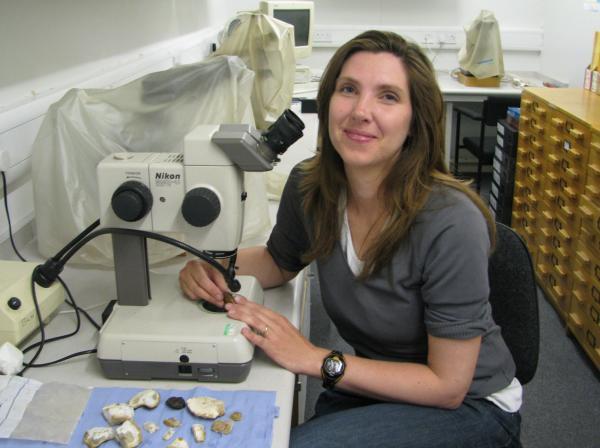
A prehistoric complex comprised of 6000-year-old tombs, one of the earliest buildings built in the United Kingdom, was discovered by Kingston University archaeologists.

Chinese archaeologists have just restarted the excavation of terracotta warriors after a 24-year hiatus.

Archaeologists discovered a series of ancient tombs that contained intact, still-decorated mummies.

A small package was found at the foot of an Egyptian mummy in a tomb carved with the phrase

The appearance of a Swiss watch in a 400-year-old tomb is confusing Chinese archaeologists.