Science is moving fast, but not fast enough.
Covid-19 research is moving at an unprecedented pace, but doctors are finding that to treat Covid-19 patients, they will have to resort to an old-fashioned procedure rather than today's cutting-edge solutions . Accordingly, in hospitals across the United States, health care workers are now relying on a century-old plasma therapy : withdrawing plasma from patients who have survived the coronavirus and then transfusing it into sick patients.
That 's because hundreds of studies have been published in recent months, and vaccine breakthroughs haven't been fast enough to keep up with the pandemic's terrifying spread . Many people are already infected and dying—which is why doctors are turning to convalescent plasma therapy as a stopgap measure they hope will help them survive the race against time until other treatments become available.
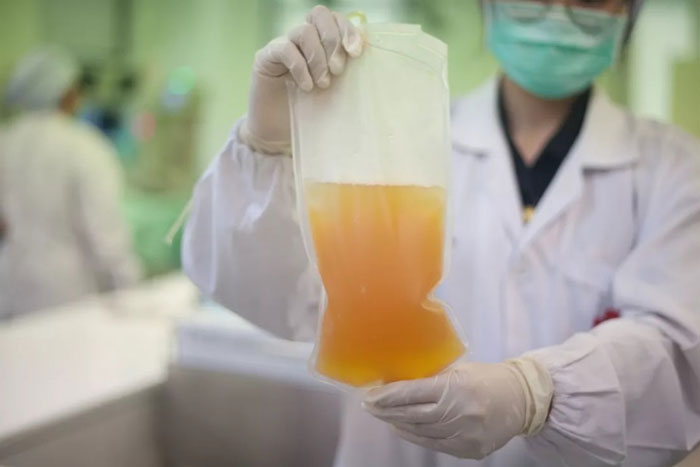
Plasma therapy is still used to treat Covid-19.
' I think of it as a bridge until we can develop a vaccine or a drug that is proven to be safe and effective, and can be produced in large quantities, ' said Elliott Bennet-Guerro, who is studying the use of plasma therapy in Covid-19 patients at Stony Brook Medicine.
After you've been infected with a virus, like the coronavirus, and recovered, your blood will be full of antibodies created by your immune system to help fight the virus. Doctors hope that giving plasma with antibodies to someone who has recently been infected and doesn't have antibodies will help them get better faster.
' With plasma, we are taking advantage of the body's amazing ability to develop antibodies and immunity to pathogens ,' says Bennett-Guerrero. ' We are giving those protective factors to people who are sick and unable to mount an immune response .'
This method has been used to treat diseases since the 1890s , when blood from survivors was transfused into diphtheria patients. Studies conducted during the 1918 flu pandemic showed that it was indeed an effective treatment. Since then, it has been used to treat dozens of other diseases, including measles and chickenpox.
And now doctors are hoping it could help people with Covid-19. Preliminary data on patients in China suggest they did better after receiving plasma from survivors, but there's not enough data yet to say for sure that plasma transfusions actually work. Researchers in the US are also conducting studies to see if patients who receive plasma improve faster than those who don't.
' It's an old technique ,' said Scott Koepsell, medical director of the blood and transplant support service at the University of Nebraska Medical Center, who has collected plasma from Ebola survivors. He said that although plasma transfusions have been used for more than a century, they are still considered a 'last resort' treatment. 'It's a really meaningful approach, but it has a lot of limitations and a lot of variables .'
For example, each person who survives an infection will have a slightly different mix of immune substances in their plasma. That can make it difficult for researchers to know whether plasma therapy is working (or not working), or whether it depends on whether a patient gets really good (or bad) plasma. Medical researchers are trying to get around this by only accepting plasma donations from survivors with high levels of antibodies, but the plasma will still vary from donor to donor.
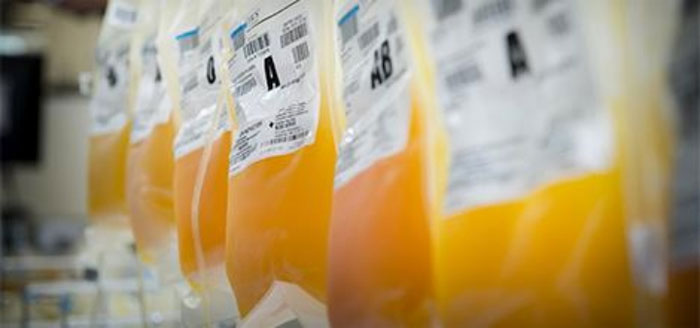
Plasma will still vary between different donors.
In addition to the uncertainty about the effectiveness of plasma transfusions, there are many potential risks involved with any blood transfusion: serious side effects can include lung damage and allergic reactions.
Koepsell treated Ebola patients in the US with convalescent plasma during outbreaks in 2014 and 2015. With Ebola, unlike Covid-19, plasma transfusions have some additional benefits: plasma can also help stop the dangerous bleeding caused by the virus . Ebola is much more dangerous for those who are already infected, making it easier to assess the risk when there is no clear evidence of the effectiveness of plasma transfusions.
In any outbreak, convalescent plasma has one big advantage: it becomes available as soon as someone survives a new infection . ' The good news is that it becomes available very shortly after something happens ,' says Koepsell.
It would be great if more standard, disease-specific drugs were discovered more quickly. Those other drugs will still take a long time to reach patients—in part because we haven't invested enough in developing them. After the SARS and MERS outbreaks, also caused by coronaviruses, scientists began working on possible treatments and vaccines. But as the years since those outbreaks have lengthened, research funding has dried up. Researchers are still no closer to the answers they're after—and they might be if they had more sustained funding.
Koepsell says there is still the potential to shorten the time between when a new disease emerges and when a cure is developed, so that doctors don't have to resort to plasma transfusions as a last resort. Investments in pandemic preparedness, as well as antiviral drug research for pathogens like the coronavirus, will give doctors the resources they need to fight the next outbreak.
' Hopefully governments and research institutes will realise that pandemics may come with greater frequency ,' he said. ' I hope we don't have to collect and transfuse blood every time a new disease appears .'