When a pathogen enters the human body, it triggers local alarm points that signal the immune system to spring into action and destroy the unknown entity. This is true whether it is a virus, bacteria, or other type of microorganism. The same is true with the novel coronavirus. Some people's immune responses are better and more effective than others, which is why some people experience milder versions of the disease and some have no symptoms at all.
But there are also immune systems that are slower to respond, so the virus can replicate easily in the lungs and cause all sorts of life-threatening complications. Then there is always an overreaction from the immune system that does more harm than good, and can also lead to death. Doctors are still trying to figure out why all of this happens and how to combat it.
And now, researchers at the University of Texas Health Science Center at San Antonio have found what could be a key factor in SARS-CoV-2's behavior. It turns out that the virus has a way of camouflaging itself once inside a cell to avoid detection . That doesn't always happen, but it could explain why the new virus is so dangerous and why some patients have a harder time getting rid of it.
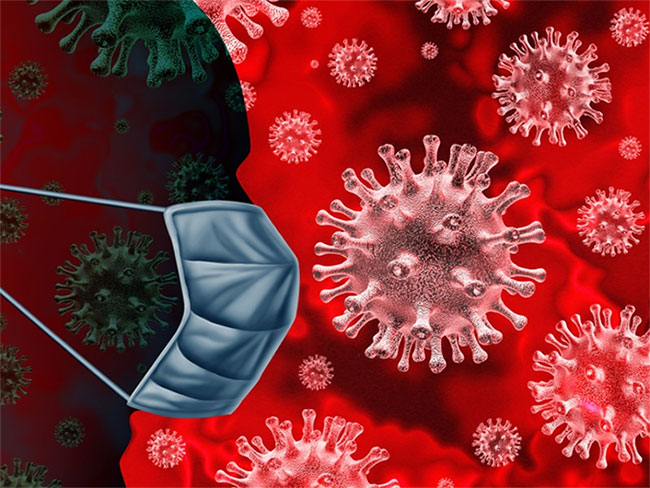
The virus has a way of camouflaging itself once inside the cell to avoid detection.
The researchers, who published their work in the journal Nature, explain the camouflage technique that allows the virus to escape immediate defense responses.
Specifically, they identified an enzyme called nsp16 that the virus makes and then uses to modify its RNA caps. When the virus binds to cells, it uses its RNA to instruct those cells to make thousands of copies of the virus. The cells are destroyed in the process, and the new copies can infect other cells. The immune system will block some of them and will also destroy the infected cells. The battle is fought at the cellular level, and this is a key process that affects a patient's recovery.
'This is camouflage,' said lead author Dr. Yogesh Gupta of the mechanism. 'Because the modifications fool the cell, the resulting viral messenger RNA is seen as part of the cell's own code, rather than coming from outside.'
This discovery could have implications for future antiviral drug development. New drugs could target the nsp16 enzyme and prevent it from making any changes. As a result, the immune system would recognize the virus more quickly and start fighting it sooner. And these drugs could speed up a patient's recovery.
A mid-May study looked at how the novel coronavirus blocks the action of interferons (a group of natural proteins produced by immune system cells in most animals to fight off foreign invaders) when it infects cells. This process allows the coronavirus to continue replicating unhindered by a rapid local immune response. Nearly two months later, another team of researchers reported a coronavirus treatment involving a nebulizer that can deliver an aerosol containing beta interferon directly into the lungs of Covid-19 patients. This was hailed as a major breakthrough that could be a game-changer in controlling the pandemic.