This special phenomenon will cause the human body to collapse because of its own immune system.
Currently, the Covid-19 pandemic shows no signs of being controlled in the near future. Treating patients alone is a difficult problem for the medical community, because some cases show signs of symptom relief after a week, then suddenly become worse.
"We've seen patients who have deteriorated rapidly. They started out on ventilators and within 24 hours they were on ventilators ," Dr. Pavan Bhatraju, who works at Harborview Hospital's emergency department in Seattle, told NPR.
Why can young patients still be in danger?
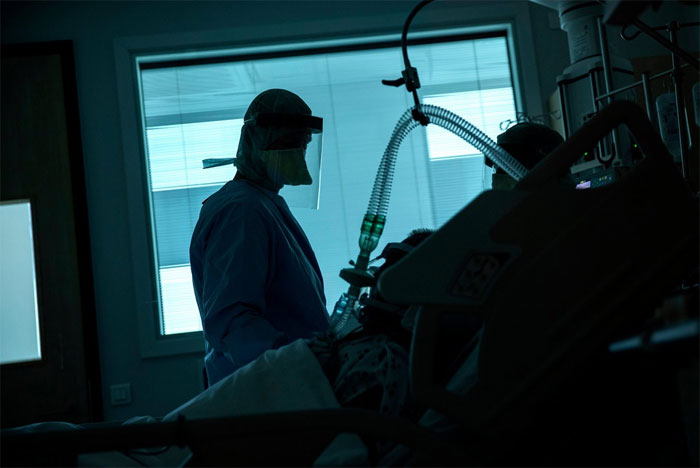
Covid-19 patients receive intensive care in Liege, Belgium. (Photo: AP).
The phenomenon of the immune system overreacting is known in medicine as cytokine release syndrome, or cytokine storm. In this phenomenon, the body's organs can collapse because of their own immune system.
"Cytokine storm" is also known as systemic inflammatory response syndrome (SIRS), cytokine release syndrome, hemophagocytic leukemia, lymphohistiocytosis. The syndrome is characterized by an uncontrolled increase in immune molecules, which can lead to organ failure and death. Patients with cytokine release syndrome have an abnormally rapid heart rate, fever, and low blood pressure.
The term 'cytokine storm' was first coined in a 1993 medical paper, when researchers described a 'graft-versus-host' phenomenon occurring in transplant recipients. It became more common in 2005, when the H5N1 avian flu outbreak occurred.
The human immune system fights off the pathogen as soon as it enters the body. That's why many Covid-19 patients don't show symptoms like a cough or a mild fever. All of these patients can still transmit the disease to others, but they're not at risk of developing any respiratory complications.
Once the immune system overcomes the pathogen, those patients will be immune to the coronavirus as long as the virus does not mutate much.
The key players in this battle are cytokine molecules, which send a series of signals to cells to orchestrate a response. Typically, the stronger the immune response, the better the chance of defeating the pathogen. This partly explains why children and young people are less vulnerable to the coronavirus. Once the virus is defeated, the immune system shuts down.
However, there are also cases where the immune system persists after the virus is no longer a threat. In this case, the immune system continues to release cytokines, causing the body to fall into a state of exhaustion. These cytokines attack many organs including the liver and lungs and can even lead to death.
'The immune system is like a faulty fire alarm. It will call the fire department over and over again, and eventually it will cause serious consequences. In this case, the firefighters are the immune cells fighting the coronavirus ,' said epidemiologist Jessica Hamerman of the Benaroya Institute in Seattle.
In a cytokine storm, an overactive immune response destroys healthy lung tissue, leading to acute respiratory failure and multiple organ failure. If left untreated, cytokine storm syndrome can be fatal.
The mechanism of attack on the body by "cytokine storm".
How to overcome cytokine storm?
Cytokine storm syndrome can occur in patients of all ages. Some scientists believe it explains why otherwise healthy young people died in the 1918 pandemic and more recently in SARS, MERS, and H1N1.
Cytokine storms are also a complication of other autoimmune diseases such as lupus and Still's disease, a form of arthritis. The syndrome could provide clues as to why otherwise healthy young people infected with the coronavirus succumb to acute respiratory distress syndrome.
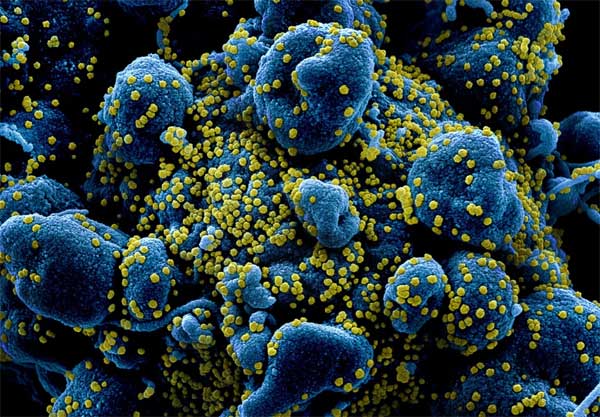
The immune system can go into overdrive and wreak havoc on organs even after the virus has been eradicated. (Photo: NIAID)
While doctors understand how cytokine storms work, they still don't know how to treat Covid-19. On the one hand, you want your immune system to fight the virus, but on the other hand, you don't want your immune system to go into overdrive.
Doctors have tried a variety of drugs, such as interleukin-6 inhibitors or IL-6 inhibitors, to counter the cytokine. Infectious disease physician Daniel Griffin told BGR that the approach has shown promising results. However, it is still experimental and not yet widely available.
One of the companies that makes the IL-6 inhibitor is conducting trials in the US and Europe. "We hope to be able to share initial results from the phase 2 trial in the US by the end of April ," Regeneron representative Sarah Cornhill told NPR.
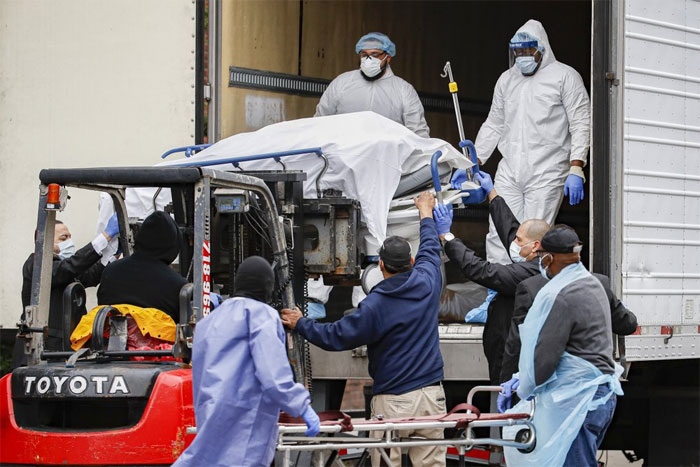
Covid-19 still has many problems that the medical community cannot grasp and control. (Photo: AP).
If any treatments succeed in stopping the immune system from going into overdrive, the death rate from Covid-19 infections could fall in the coming months.
'People are talking about cytokine storms as a well-recognized phenomenon, but if you asked doctors two weeks ago, they probably had never heard of it,' Dr. Jessica Manson, an immunologist at University College London Hospital, told the New York Times.