The Ministry of Health has just issued instructions on home quarantine, accommodation, hygiene and disinfection at home to prevent acute respiratory infections caused by the new strain of coronavirus (nCoV).
Home isolation rooms need to be disinfected daily, and all floors, walls, tables, chairs, objects, stairs, etc. need to be regularly wiped down.
According to the Ministry of Health, medical isolation includes isolation at medical facilities, isolation at centralized isolation facilities, and isolation at home or place of residence.
Home quarantine instructions
Subjects quarantined at home or place of residence are those who do not have symptoms of suspected nCoV infection (cough, fever, difficulty breathing) and have one of the following factors:
- Living in the same house or place of residence with a confirmed or suspected case during the period of illness.
- Worked with a confirmed or suspected case during the illness.
- Being in the same tourist group, working group, or entertainment group with a confirmed or suspected case during the illness.
- Having close contact within 2 m with a confirmed or suspected case during the illness in any situation.
- Sitting in the same row or two rows in front or behind on the same bus/train/plane with a confirmed or suspected case. Foreigners entering Vietnam from China or having traveled through China (except Hubei province) within 14 days from the date of entry.
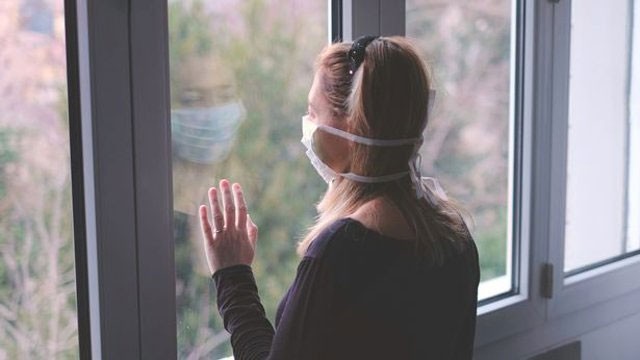
Maximum quarantine period is 14 days.
The maximum quarantine period is 14 days, calculated from the date of last contact with a confirmed or suspected case or from the date of entry into Vietnam. When the suspected case is diagnosed as not having the disease, the quarantine of the related quarantined persons will end.
Medical isolation at home or at the place of residence can be carried out at any place of residence or accommodation such as private houses, apartments, collective houses, dormitories of schools, industrial parks, factories, hotel rooms, motels, inns and accommodation rooms of agencies and units. Complying with the regulations on isolation at home or at the place of residence as well as implementing the requirements on environmental hygiene and personal hygiene at the isolation place not only helps prevent the spread of the disease to the community but also keeps family members and those around them safe.
For more context, see Things to do during home isolation to prevent Covid-19 from spreading.
Instructions for disinfecting isolation rooms
In disinfection, the quarantined person's room and the common living area at the place of residence or accommodation must be cleaned and disinfected daily. You can use common detergents, disinfectant solutions containing 0.05% active chlorine (ensuring a contact time on the surface of 10 minutes) or 0.1% active chlorine (ensuring a contact time on the surface of one minute) or containing at least 60% alcohol. Use a rag or towel to wipe with clean water first, then wipe with detergent or disinfectant solution according to the principle of wiping from clean to dirty areas, from inside to outside, from top to bottom.
Surfaces that need to be cleaned include floors, walls, tables and chairs, objects in public areas (waiting areas, playgrounds, gyms, etc.), public restrooms, stairs, and elevators. These areas need to be disinfected at least once a day. Door handles, stair handrails, railings, buttons, and elevator cabins need to be disinfected at least twice a day.
Cleaners must wear gloves and masks when cleaning and disinfecting the house. Organize daily waste collection and disposal.
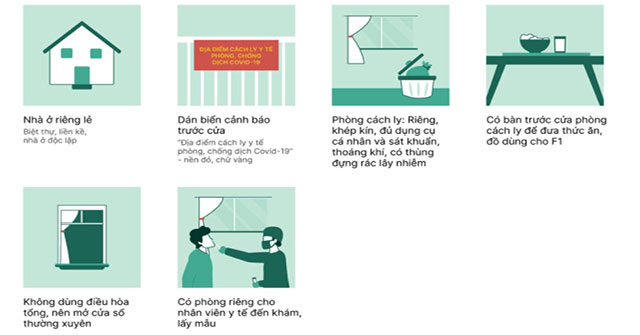
In addition, the isolation room needs to choose a suitable location in the place of residence or accommodation to be used as an isolation room. It is best to arrange for the person being isolated to stay in a separate room, preferably at the end of the row, downwind, away from crowded areas. In the case of isolation at home, it is also necessary to arrange a separate room for the person being isolated. If there is no separate room, the bed of the person being isolated should be at least 2 meters away from the beds of other family members and away from the common living area.
The room for quarantined people must be well-ventilated, limit the use of air conditioning and furniture in the room, have a toilet with enough hand soap and clean water. There must be a trash can with a lid in the room and it must be emptied daily.
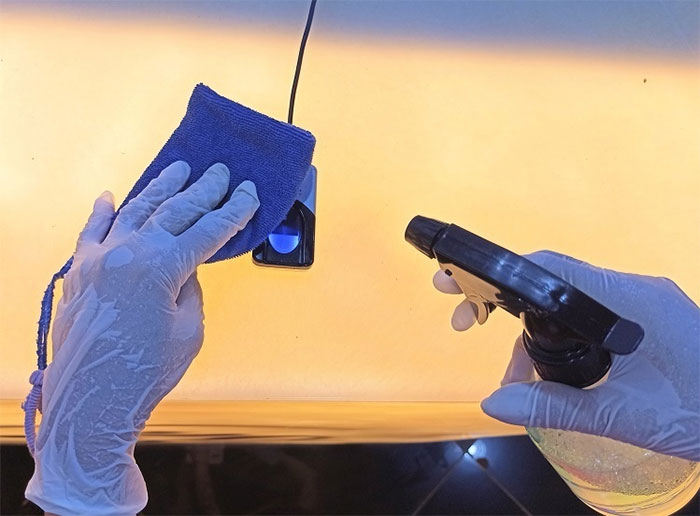
Fingerprint devices need to be disinfected regularly. (Photo: Minh Anh).
In addition to disinfection and environmental sanitation, quarantined people need to commit to quarantine with local authorities and strictly follow the self-isolation at their place of residence and accommodation for the prescribed time. Every day, quarantined people must measure their body temperature, monitor their health, record the measurement results and general health status on the daily health monitoring form and notify the medical staff of the commune, ward or town. Quarantined people need to limit leaving their private rooms, limit direct contact with family members, accommodation and other people. Absolutely do not leave the place of residence during the quarantine period.
People in quarantine need to practice good personal hygiene measures such as regularly wearing masks, collecting used masks, towels, and tissues in separate covered trash bags and disposing of them daily. Regularly wash hands with soap and clean water or a disinfectant solution containing at least 60% alcohol. Do not share personal items such as bowls, chopsticks, spoons, cups, toothbrushes, towels, etc. with others. Do not eat together with other people in the family, residence, or place of residence.
In particular, make sure to eat nutritious food, drink enough water, exercise, and do light exercises on the spot.