
New technology
Path to create energy
The first line of the world could convert sunlight into official energy into operation in the Netherlands.
Browse ScienceInfo articles and explainers related to Light.
3,286 published items.
The first line of the world could convert sunlight into official energy into operation in the Netherlands.
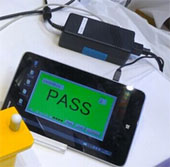
The device can identify the liquid inside as an explosive or flammable form, helping to speed up the speed and accuracy of checked baggage at airports.
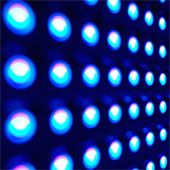
This year's Nobel Prize for Physics was awarded to a group of three Japanese scientists for the invention of blue LED bulbs.

Frequent cleaning of the aquarium or water in the continuous lake is a nuisance that many aquarists encounter.

Japanese scientists introduce a device that can detect users lying or telling the truth, through color changes.
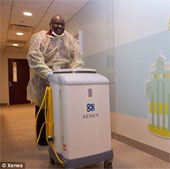
A new line of robots named Little Moe is being deployed in the fight against Ebola.
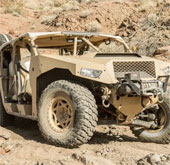
The American Ultra Light Combat Vehicle, DAGOR is about the size of a 4-door Jeep Wrangler, but much better.
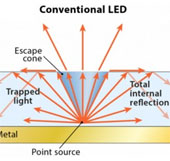
Researchers at Princeton University have made a significant breakthrough in improving the brightness and efficiency of LEDs.
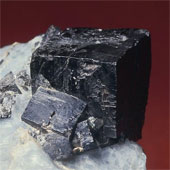
Scientists still study new and more effective solutions and the following 5 improvements are expected to change photovoltaic technology in the coming time.
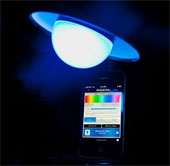
Mexico will be the first African country to use data transmission technology with light emitting from LEDs at speeds up to 10Gb / s.
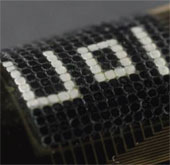
US scientists have created artificial systems that mimic octopus and squid camouflage by changing the color of the environment.

The tendency to use small homes is quite common in the community. So a team from the New York-based design firm launched a mobile home called Taku Tanku.
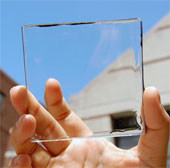
Researchers from the University of Michigan have developed a new, transparent material such as solar-focused glass that can be fitted to windows.

Engineers at the University of New Mexico and the Los Alamos National Laboratory are working on the use of convergent ion beam technology (FIB) to decorate different mat…
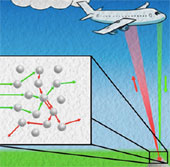
An aerial plane can use a laser beam to sweep a large area beneath it and detect where it is carrying bombs or other dangerous chemicals and stimulants.