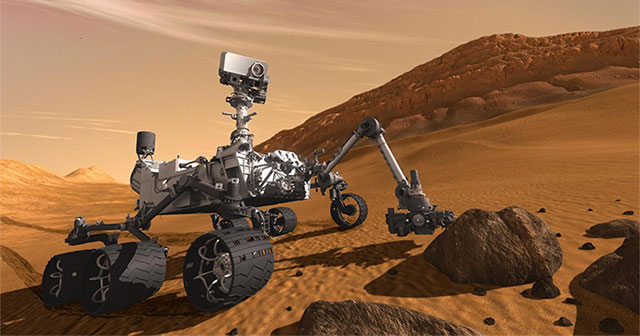
NASA's Mars rover sends back surprising images
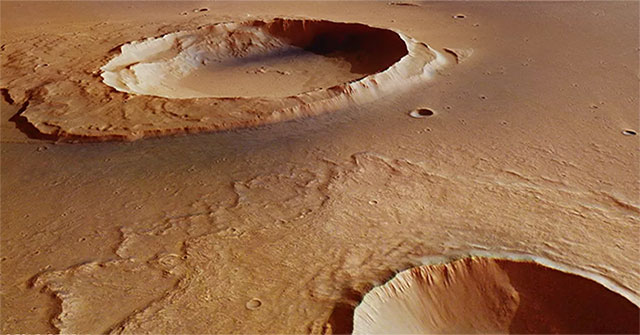
The Perseverance rover has captured new images revealing geological evidence of a fast-flowing river that once poured into Mars' Jezero Crater.
Follow the exploration of Mars through orbiters, landers and rovers, with explainers on Martian geology, climate, water and habitability.
Begin with clear explanations of the key ideas, discoveries and questions in this subject.
The Perseverance rover has captured new images revealing geological evidence of a fast-flowing river that once poured into Mars' Jezero Crater.
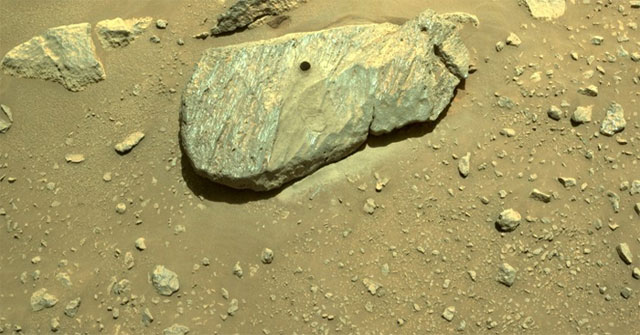
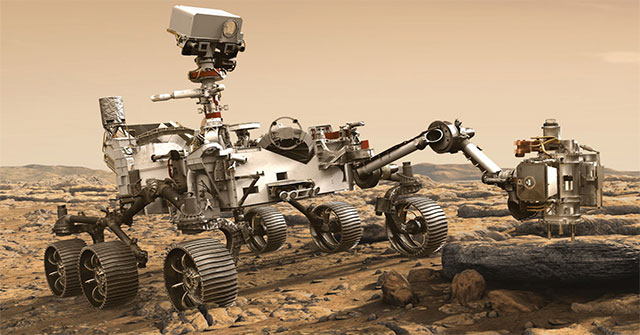
NASA's Perseverance rover has collected soil and rock samples on Mars to bring back to Earth for research.
Clues to the existence of coastlines on Mars 3.5 billion years ago have been revealed through newly discovered sedimentary rock layers and stratigrap…
NASA has made many bold plans for the future of the Mars program, adding self-propelled ships to the Martian surface by 2020 and sending manned space…
A crack appeared on the heat shield of the new Mars exploration vehicle scheduled to launch into space in July 2020, NPR reported on April 27.
NASA's upcoming Mars mission will be a challenging and demanding journey. One of the most important stages is to ship the landing pillar.
Read recent ScienceInfo stories and explainers about Mars Exploration.
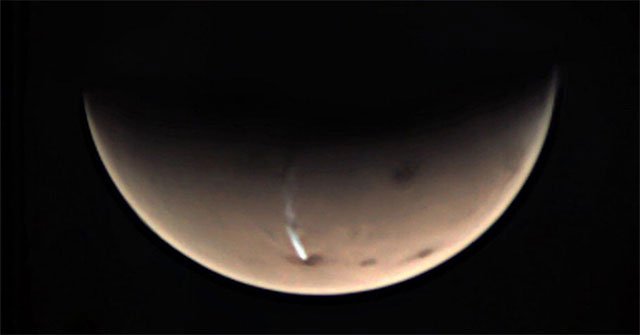
The cloud formed above the Arsia Mons volcano before dawn, then expanded at speeds up to 600 km/h before dissipating.
The NASA robot completed its mission as originally planned, lasting 687 Earth days or a Martian year, and began its extended mission.
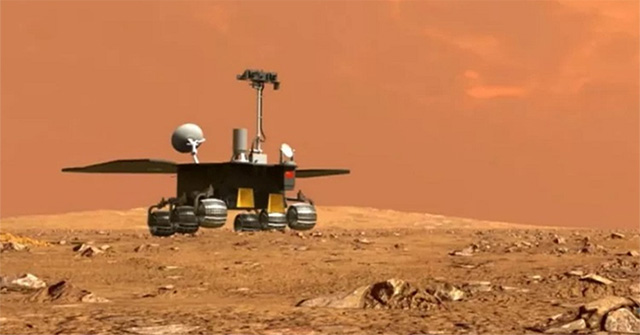
Mars robot Zhu Rong cannot wake up from hibernation because its solar panels are covered by a thick layer of dust.
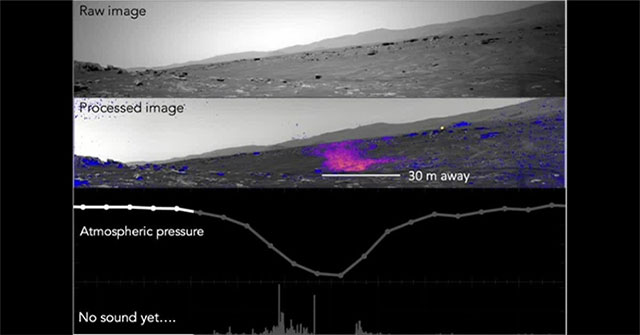
The first recording of a dust storm on the surface of Mars revealed that the dust tornado that 'swallowed' the Perseverance robot in September 2021 was 119 m high.
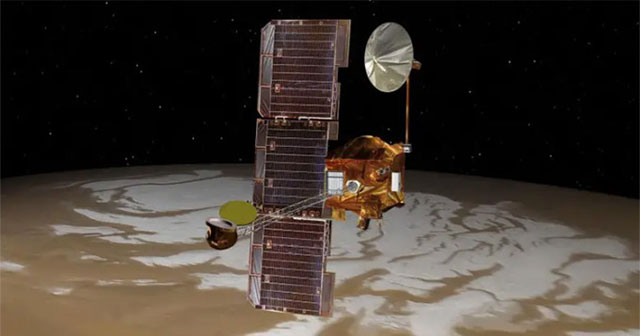
An error in calculating the remaining fuel of the 22-year-old Mars Odyssey orbiter had experts thinking it was about to end its mission.
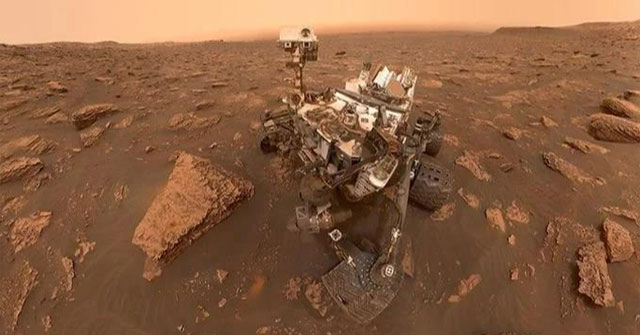
NASA's Jet Propulsion Laboratory (JPL) posted a panoramic image of a Martian sunset taken by the Curiosity rover, made up of 28 small images.
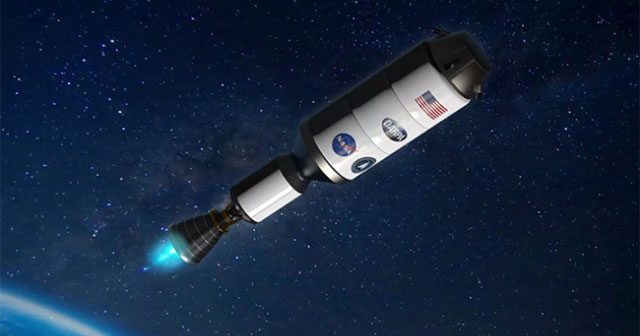
NASA will develop nuclear rockets to cut the time it takes to make a manned trip to Mars from seven months to 45 days.
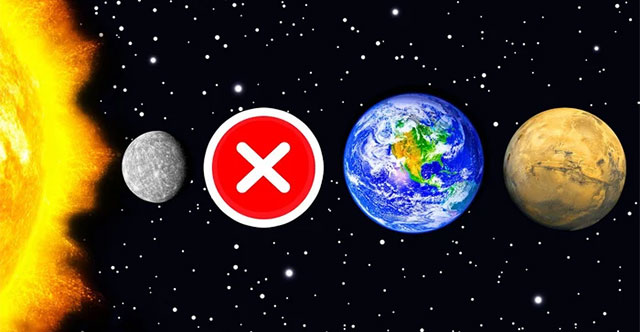
If Mars suddenly disappeared, the first thing Elon Musk would probably have to face is a crowd of confused investors.
Continue with more articles, discoveries and explanations from this subject.
There is no official information on whether or not NASA will completely cancel the mission, or just delay the mission until 2018.
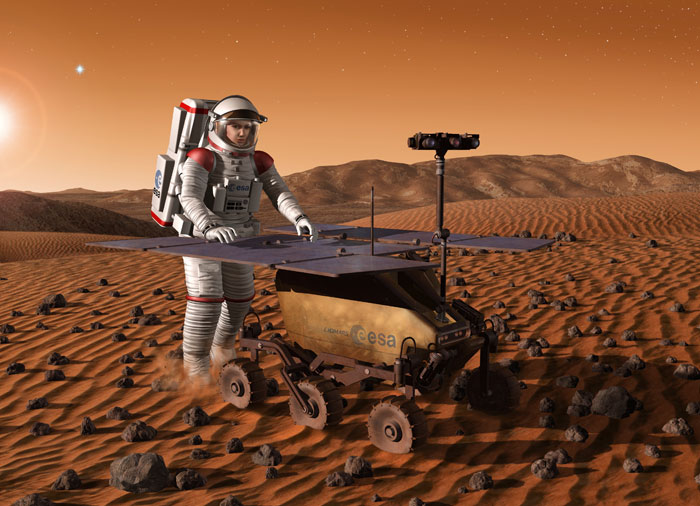
The European Space Agency (ESA) announced on October 1 that it has identified four potential locations on Mars to carry out self-propelled landings in 2019.
On June 3, 2010, a group of six international volunteers began to confine themselves in a room like the 550m3 spacecraft at the Russian Academy of Science, in a mission…
NASA's Perseverance rover on Mars witnessed a solar eclipse
Nearly asteroids near Earth provide a unique opportunity to test new technologies necessary for the mission to send people to Mars.
Unlike on Earth, Martian dust storms are weaker and smaller, but play an important role in transporting dust across the planet.
A new technique performed by Martian warrior Curiostiy has helped uncover traces of the previously unknown building blocks of life on this mysterious planet.
NASA is sponsoring a project to develop a specially designed aircraft capable of flying on Mars to search for signs of life on Mars.
The MAGGIE aircraft can fly 179km at an altitude of 1,000m, helping to study the atmosphere and geophysics on Mars.
The historic dust storm on the red planet makes the Opportunity explorer vehicle unable to reload energy and lose contact with the Earth.
A big problem that has long been a headache for scientists is how to go after people traveling to distant planets, enough fuel for the spacecraft to return.