Quantum Physics
Understand quantum physics through wave-particle duality, uncertainty, entanglement and the experiments that reveal how the quantum world behaves.
9 articlesExplore matter, energy, motion and forces, then learn how relativity, quantum mechanics and particle physics explain the physical world.
Browse focused subjects with articles and explainers selected for each area.
Understand quantum physics through wave-particle duality, uncertainty, entanglement and the experiments that reveal how the quantum world behaves.
9 articlesExplore the fundamental particles and forces of nature through the Standard Model, accelerators, neutrinos and high-energy experiments.
22 articlesBegin with clear explanations of the key ideas, discoveries and questions in this subject.
New insights into dark matter emerge as researchers explore theories about
Physics is the science that explores the most fundamental laws and structures of nature, and attempts to describe and explain the universe we live in…
Two Vietnamese, one living in Hanoi and the other in Ho Chi Minh City have independently researched and said, found the relativity of Albert Einstein…
You may have come across the phrase
Albert Einstein's theory of relativity will be put to practical tests on a new satellite launched into space.
A team of researchers at the University of Queensland led by Dr. Martin Ringbauer successfully simulated time travel using the fundamental particles…
Read recent ScienceInfo stories and explainers about Physics.
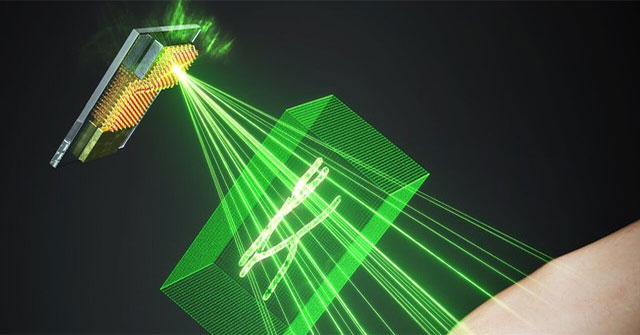
A collaboration between scientists from the University of Ottawa and Sapienza University has captured for the first time the dance of two quantumly entangled photons in…
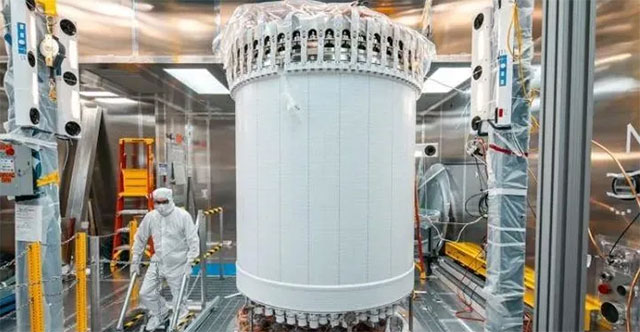
New results from the world's most sensitive dark matter detector have narrowed down the range of particles known as WIMPs to the best ever.
Scientists have found a new limit on the mass of a particle of light (photon) based on indirect measurements.
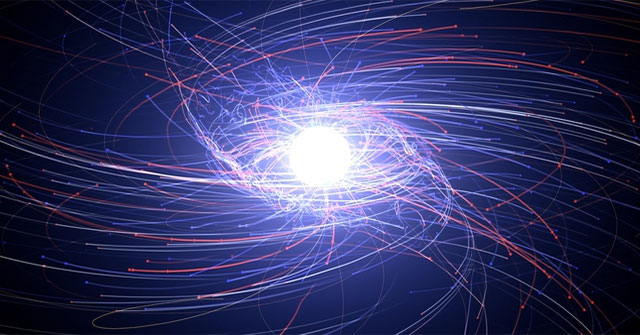
Modern science believes that just a little bit of antimatter can release huge amounts of energy, which is also considered the most ideal and perfect source of energy.
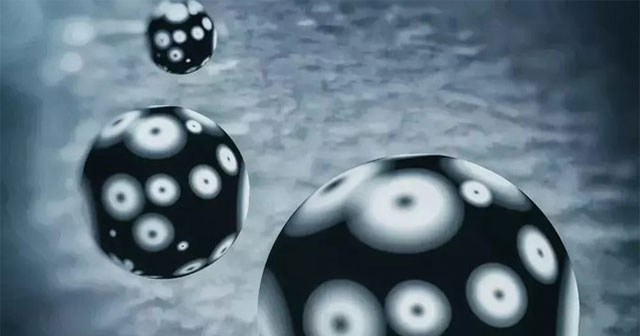
For the first time, physicists have created and detected

Photonic crystals are optical nanostructures that affect the propagation of photons within them in a similar way to the way semiconductor crystals affect the motion of e…
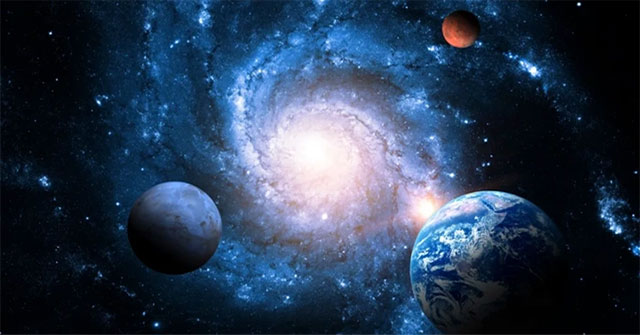
Dark matter is difficult to detect, but is slowly becoming clear with human evidence.

If proven experimentally, this would be another confirmation of Einstein's famous formula.
Continue with more articles, discoveries and explanations from this subject.
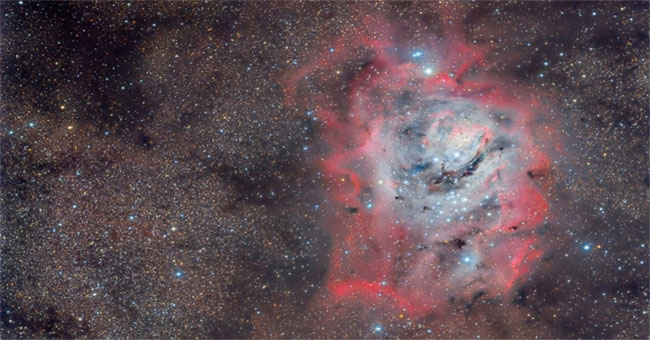
The universe is expanding 10% faster than previously anticipated, questioning whether Albert Einstein's relativity theory is accurate or not?
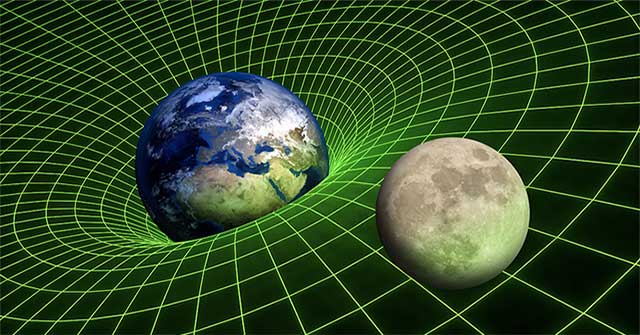
There are many difficult problems and unsolved mysteries in the history of physics, among these unsolved mysteries, gravity is the greatest mystery.
Scientists have for the first time found a groundbreaking technique that turns light into matter, a goal that has been thought impossible since the idea came out 80 year…
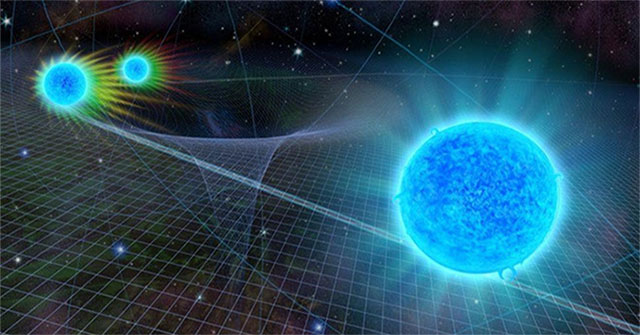
Researchers experiment with Einstein's theory of relativity on a star near the supermassive black hole Sagittarius A.

NASA's GP-B gravity probe is designed to test two predictions drawn from Albert Einstein's theory of relativity and completed the mission after 5 years of research.

Latest research confirms the correctness of the theory proposed by Albert Einstein nearly a century ago ...

Currently, general theory of relativity is considered to be the perfect description of the most attractive force of modern physics.

This image has taken us beyond anticipation, dark matter has now become something visible and measurable.
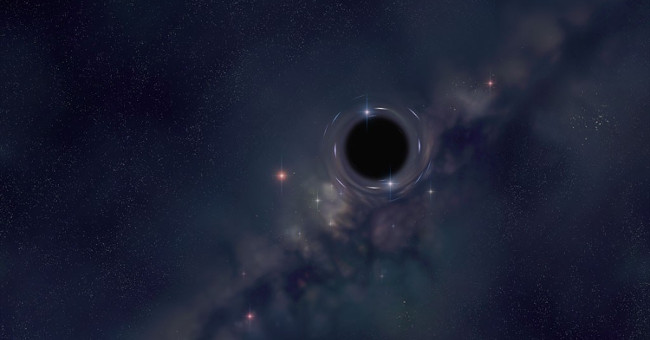
New research by American scientists shows that dark matter is produced from the original black hole, which appeared in the first millisecond after the Big Bang.
The large LHC particle accelerator will be operated at the largest energy ever, hoping to detect (or even create) a mini black hole.
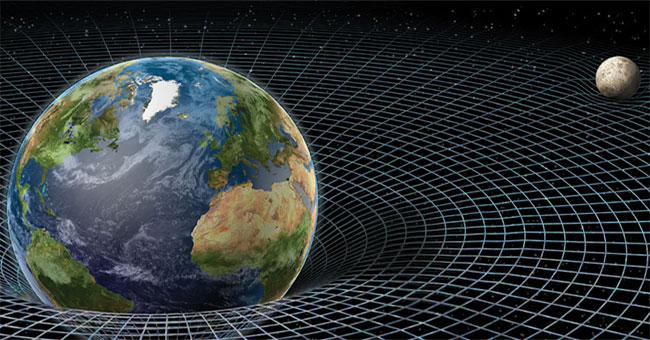
We still know that gravity is a gravitational force, it helps everything to be tied to the ground. However, that is just a theory. What about other explanations?
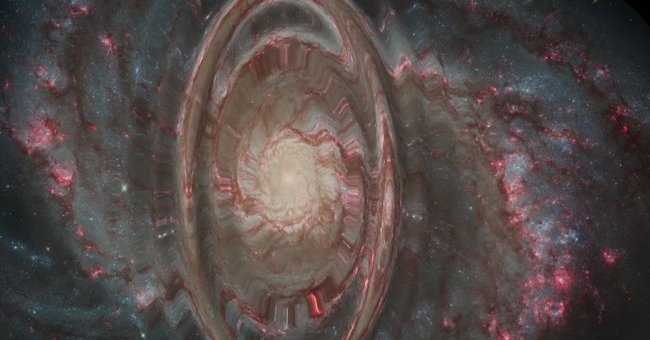
A huge experiment in Pisa, Italy, is being conducted to find the existence of gravitational waves in the theory of relativity proposed by the scientist Albert Einstein.