Canadian scientists say that people who are proficient in using two languages in everyday communication throughout their lives may slow the occurrence of dementia for up to 4 years.
They explained that the effort involved in using multiple languages seems to increase the blood supply to the brain and ensure that the neurological connections are maintained and healthy. These two factors are believed to help fight dementia.
Professor Ellen Bialystok of York University, Toronto, Canada said 'the results of this study surprised us'.
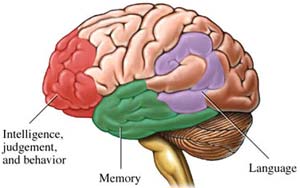 In an interview with CTV, she explained, 'In the process of using two languages, you used the brain and brain parts needed for this kind of activity and with these experiences your brain will stronger'.
The main cause of dementia in older people is Alzheimer's disease. This disease will destroy people's memory slowly. There is currently no effective treatment for this disease.
Bialystok's team conducted research on 184 patients, 91 who spoke only one language and 93 who were fluent in two languages. These people had symptoms of dementia and participated in treatment at Toronto Hospital from 2002 to 2005.
This research group has determined the average age of dementia symptoms in the group of people who only know one language is 71.4, while the other group is 75.5. The difference remains the same even when considering some other factors such as differences in culture, immigration, employment education and gender.
Ms. Bialystok stressed that proficient use of two languages only helps slow the occurrence of dementia, but it does not help prevent disease.
Psychologist Fergus Craik, another member of the research team, said the data showed that proficient use of the two languages would have a great effect on slowing the occurrence of dementia. But he also notes that these are only preliminary findings. And also, his team has planned a deeper study of the effectiveness of fluent use of two languages.
The Alzheimer's Association of Canada says that the results confirm the correctness of some recent studies suggesting that a good way to slow the effects of dementia is to keep the brain active.
According to the association, in 2000 Canada spent more than 5.5 billion Canadian dollars (equivalent to 4.7 billion US dollars) to care for people with Alzheimer's disease.
The Kiet